In-house HDPE membrane welding
Hot-wedge / extrusion welds give fully sealed, high-strength seams that resist leaks and root penetration.
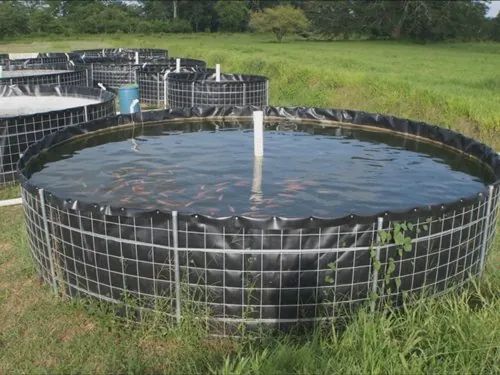
An HDPE geomembrane-lined fish tank uses hot-wedge welded, fully sealed, root-proof seams at a lower material cost than welded PVC tarpaulin. It suits tilapia, shrimp and biofloc farms above ground on a steel frame, and is the practical choice for lining large excavated or banked culture ponds.
15+ years in aquaculture engineering · Trusted by Japfa Group, Japan Nissui & Tropo Farms · Shipped worldwide in one container
Product Description
SIGMA Aquaculture welds HDPE fish tanks and pond liners on its own membrane line in Shandong, China — a lower-investment alternative to earthen ponds whose water quality is far easier to manage.
An HDPE fish tank is a culture vessel made from food-grade high-density polyethylene geomembrane, either fitted to a steel frame above ground or used to line an excavated pond. Compared with an earthen pond, an HDPE biofloc tank separates the culture water from the soil, so water quality is easier to control and the initial investment stays lower — the reasons this format has become standard in biofloc fish farming.
The membrane itself is non-toxic and food-grade — the HDPE granule carries US FDA certification — and the material resists acids and alkalis, which makes the tank suitable for seawater as well as freshwater culture and for temperatures up to 100 °C. Farms run HDPE fish farming tanks for tilapia, catfish and shrimp; for tilapia grow-out specifically, see our tilapia farming equipment guide.
One practical point SIGMA states plainly: HDPE membrane is rigid and cannot be folded after welding, so we ship it in rolls and the panels are welded on site. If you would rather receive a tank that is already factory-welded and ready to hang on its frame, the PVC tarpaulin fish tank is the alternative we build for that.
A tank only performs as well as its aeration. Most HDPE tank projects pair the vessel with surface or bottom aeration — a paddle wheel aerator for ponds and large tanks — and SIGMA supplies the matching aeration equipment and accessories with the liner order.
Advantage
HDPE geomembrane gives the lowest material cost per square metre of any liner SIGMA welds, which makes it the practical choice for large excavated ponds and big-footprint biofloc farms.
Specifications
Indicative formats integrated from the standard range — thickness, size, frame and fittings are made to order on SIGMA's own membrane-welding line.
| Model | Capacity | Typical use | Core configuration |
|---|---|---|---|
| SIGMA-HDPE-S | ~4–10 m³ | Framed round tank Ø2–3 m | 0.5–0.75 mm membrane |
| SIGMA-HDPE-M | ~15–30 m³ | Framed round tank Ø4–5 m | 0.75–1.0 mm membrane |
| SIGMA-HDPE-L | Hundreds to thousands of m³, per site | Excavated / banked lined pond | 1.0–1.5 mm membrane |
| SIGMA-HDPE-R | Per order (L × W × H) | Rectangular, custom | 0.75–1.0 mm membrane |
| Liner material | HDPE geomembrane — food-grade, non-toxic |
|---|---|
| Thickness options | 0.5 / 0.75 / 1.0 / 1.25 / 1.5 mm (500–1500 µm) |
| Welding | Hot-wedge / extrusion welding — fully sealed, leak-proof and root-proof seams |
| Frame / format | Galvanized steel pipe or steel-wire frame (above-ground), or excavated / banked pond liner |
| Fittings | Bottom / central drain, overflow, inlet, aeration ports |
| Species | Tilapia, catfish, shrimp and biofloc culture |
| Working conditions | High-density grow-out, biofloc, RAS reservoir / holding — indoor or outdoor |
System composition
Hot-wedge / extrusion welds give fully sealed, high-strength seams that resist leaks and root penetration.
HDPE geomembrane costs less than welded PVC tarpaulin for the same area — the economical choice for large footprints and excavated lined ponds; a factory-welded PVC tarpaulin tank, by contrast, needs no on-site welding and offers a longer service life.
HDPE is safe for food fish and shrimp, keeping culture water clean.
0.5–1.5 mm to match budget and lifespan; heavy gauges suit large excavated ponds.
Above-ground framed round tanks, excavated lined ponds, banked reservoirs or custom rectangles.
Size, membrane thickness, frame and fittings made to order.
Application
Gallery
Logistics
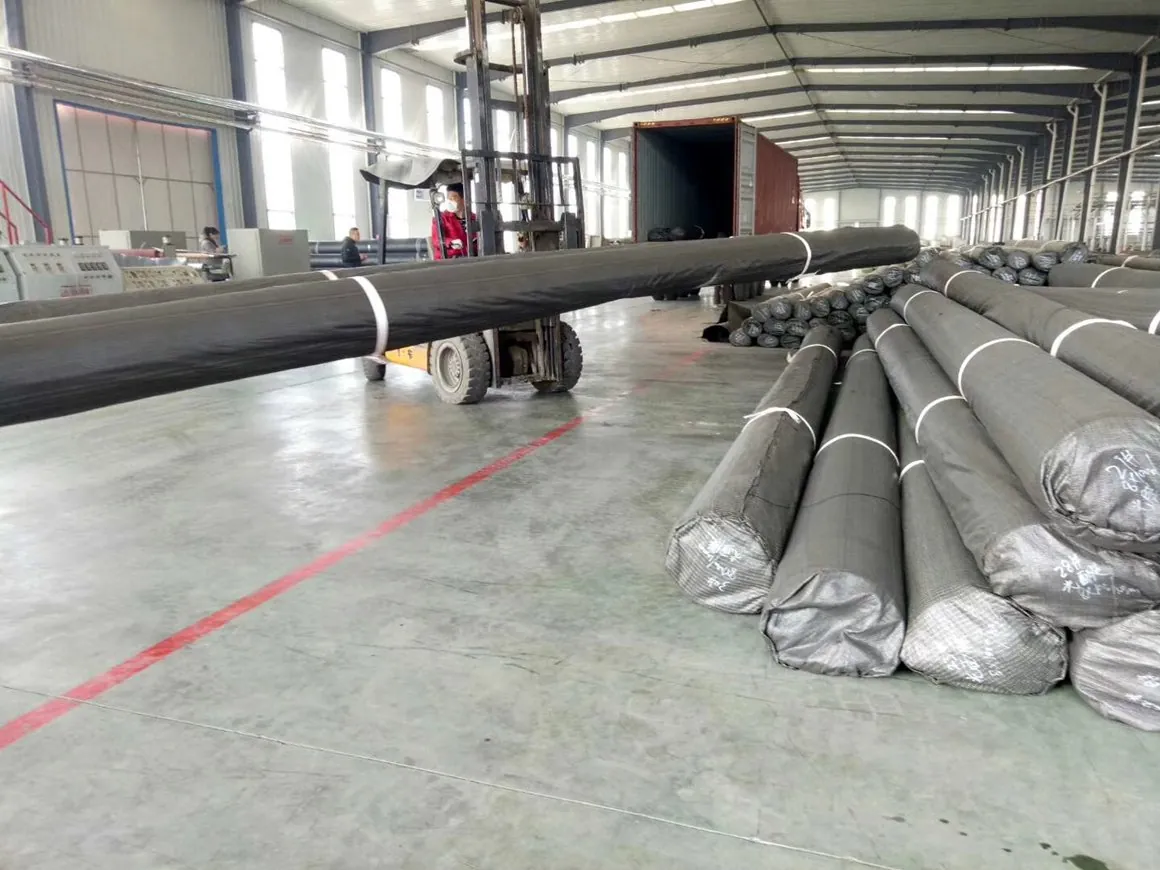
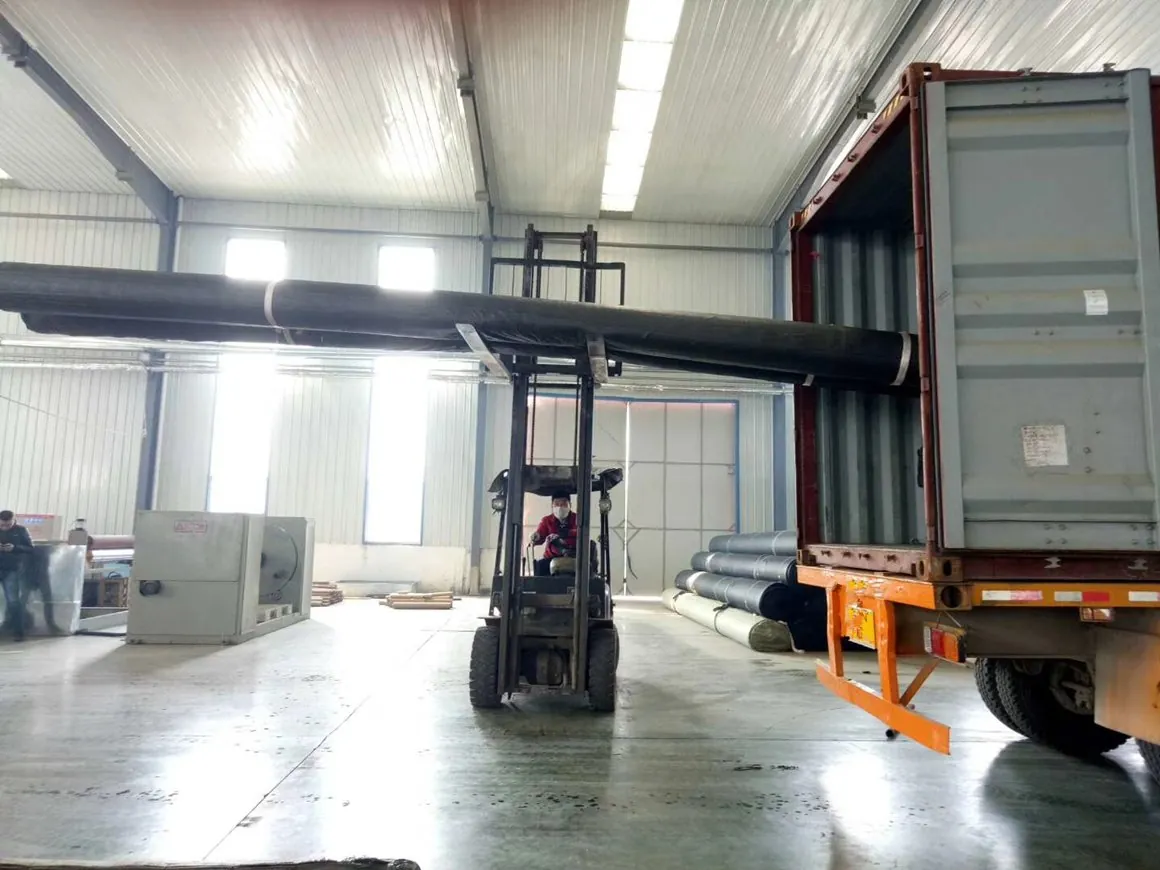
HDPE membrane ships in rolls packaged in woven geotextile and loaded into standard containers — packing is sea-freight suitable for worldwide delivery.
FAQ
It uses a high-density polyethylene (HDPE) geomembrane liner — the same material used for industrial water containment — joined by hot-wedge / extrusion welding for fully sealed, leak-proof seams.
Each has its strengths: a PVC tarpaulin tank leaves the factory fully welded — no on-site welding — and offers a longer service life, while HDPE geomembrane costs less and is welded panel by panel on site, making it the economical choice for large-area and excavated / banked lined ponds.
The geomembrane is supplied in thicknesses from 0.5 mm to 1.5 mm (500–1500 micron); a thicker membrane gives longer service life and suits large excavated ponds.
It is widely adopted for tilapia, catfish and shrimp culture, biofloc systems, and RAS make-up or reservoir basins, in round or rectangular shapes from small nursery units to large commercial ponds.
No — an HDPE fish tank is a land-based, above-ground or excavated vessel lined with welded HDPE geomembrane, while an HDPE fish cage is a floating collar and net pen made from rigid HDPE pipe for open-water culture. SIGMA supplies both; see our floating cage page for cage culture in lakes, reservoirs or the sea.
Related equipment
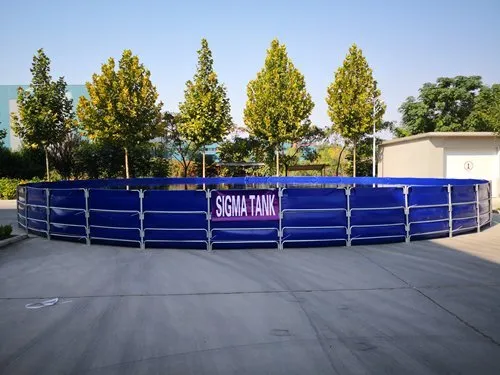
Modular PVC fish-farming tanks — quick assembly, energy-saving, food-safe liner, lower cost than concrete. Any size for biofloc & RAS. Factory-direct from SIGMA.
View details →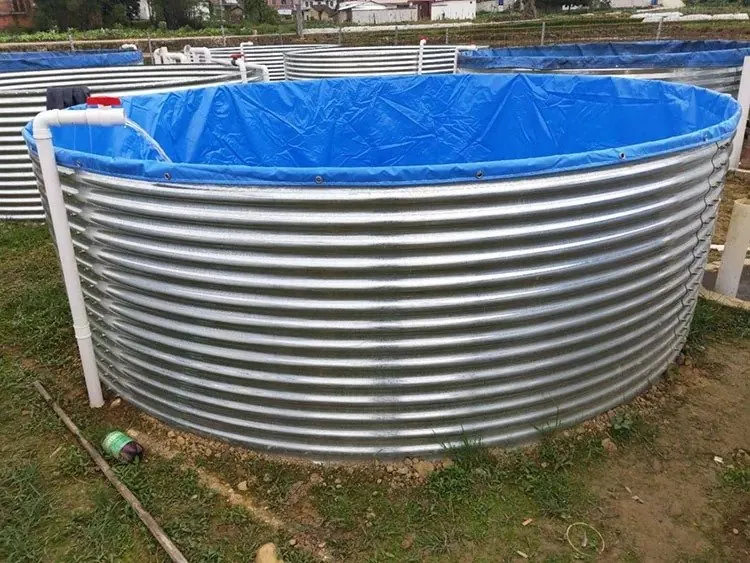
Galvanized steel fish-farming tanks with food-grade liner — strong, fast on-site assembly, long service life. Custom diameters for fish & shrimp, factory-direct.
View details →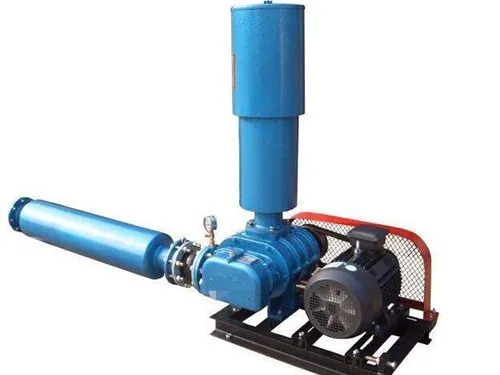
High-efficiency roots blowers for biofloc, RAS & pond aeration. Direct-from-factory pricing, multiple capacities, worldwide export from SIGMA.
View details →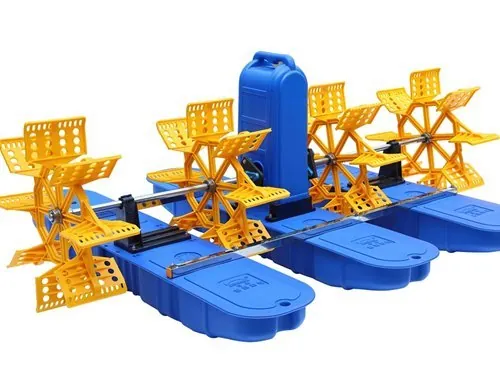
Energy-efficient paddle wheel aerators for shrimp & fish ponds — strong circulation & oxygen transfer, durable impellers. Multiple sizes, factory-direct from SIGMA.
View details →Tell us your species, target density and site — our engineers size the system and reply within one business day.