White Spot Disease in Shrimp (WSSV): Prevention & Biosecurity
White spot disease (WSSV) can wipe out a shrimp pond in days. There is no cure — learn the signs and the biosecurity and water control that prevent it.
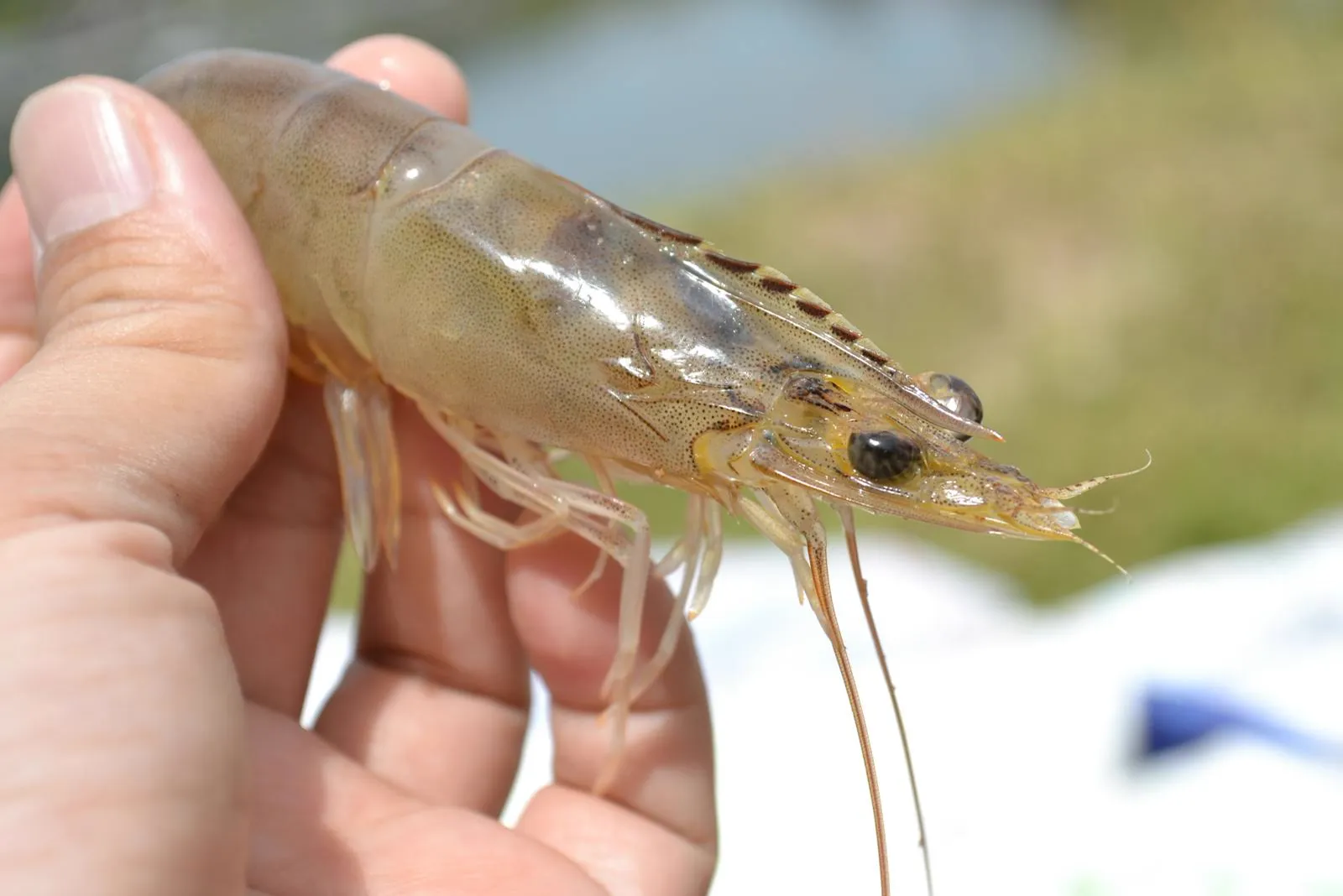
White spot disease (WSD) is a viral infection of shrimp caused by white spot syndrome virus (WSSV). It is the most destructive pathogen in shrimp farming: once it enters a pond, mortality can reach 100% within 3 to 10 days, and there is no treatment that cures an infected crop. That single fact decides how you fight it — you keep the virus out, because once it is in, you have already lost.
We supply biosecurity and water-treatment equipment to vannamei farms in Ecuador, Indonesia, Vietnam and Thailand, and the question we hear after every outbreak is the same: “What could we have done?” The honest answer is almost always something on the intake side — the water, the post-larvae, or a bird — not something you could have dosed into the pond after the spots appeared.
What is white spot disease in shrimp?
White spot disease is a notifiable viral disease — listed by the World Organisation for Animal Health (WOAH, formerly OIE) since 1997 — that affects whiteleg shrimp (Penaeus vannamei), black tiger shrimp (P. monodon) and most other farmed and wild crustaceans. The cause is WSSV, a large DNA virus that replicates fast: roughly one cycle every 20 hours at 25 °C, which is why the disease moves through a pond so quickly.
The name comes from the most visible sign — white, round spots 0.5–2 mm across embedded in the inside of the shell (carapace). But by the time you see them, the infection is usually advanced.
How to recognise WSSV: the signs
Shrimp with white spot disease typically show, in order:
- Sudden loss of appetite — feed trays come up full a day or two before deaths start.
- Lethargy — shrimp gather at the pond edge or surface instead of staying off the bottom.
- White spots on the inside of the carapace and on the appendages — the classic sign, best seen against the light.
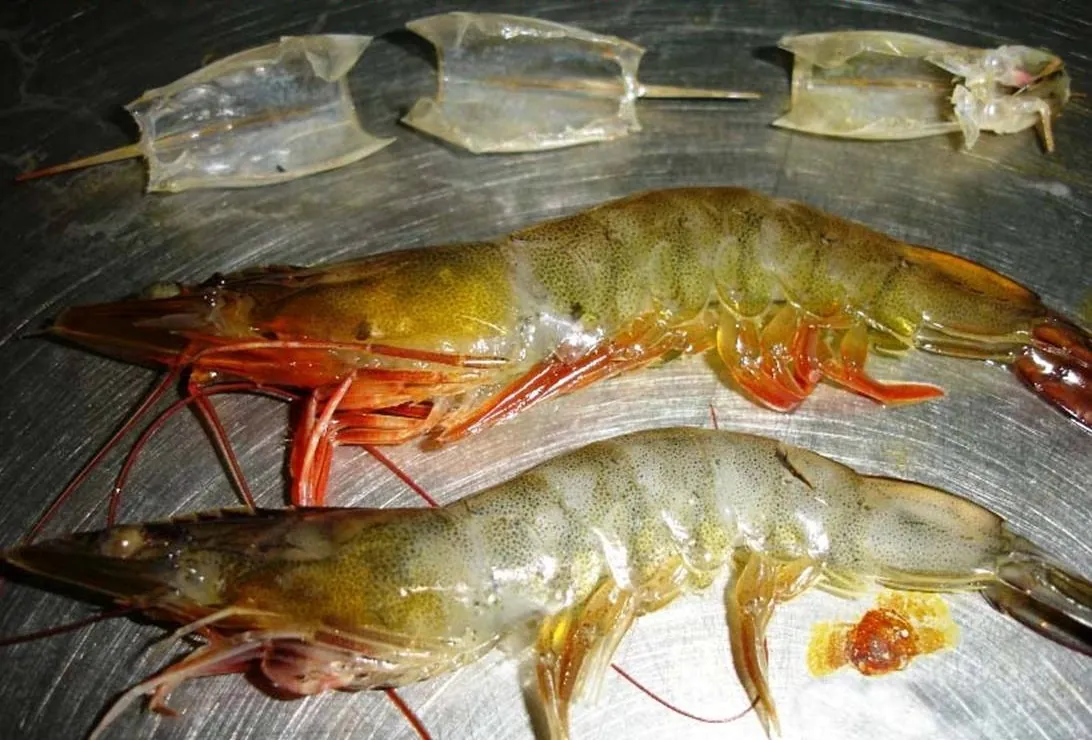
- Reddish or pink body discolouration — a loosened cuticle and a pink-to-red hepatopancreas.
- Mass mortality — deaths begin 1–2 days after the first sick shrimp and peak between day 3 and day 10.
Note that white spots alone are not proof: bacterial shell disease and high alkalinity can also leave white marks. A PCR test on the gills or pleopods is the only way to confirm WSSV, and confirmation matters because this is a disease you are legally obliged to report in most producing countries.
What causes white spot in shrimp, and how it spreads
WSSV does not appear from nowhere. It is carried in, by one of three routes:
- Infected post-larvae (vertical transmission). The virus passes from carrier broodstock to their PL in the hatchery. This is the single most common way a clean farm gets infected — you stock the disease on day one.
- Contaminated intake water and carriers (horizontal transmission). WSSV survives in seawater and brackish water and spreads when healthy shrimp ingest infected tissue or simply share the water. Wild crabs, copepods, Artemia, polychaete worms and even birds carrying tissue between ponds are all documented vectors.
- Cannibalism inside the pond. Once a few shrimp are infected, the survivors eat the dead and the virus amplifies explosively — this is why mortality goes from a trickle to a wall in 48 hours.
Stress is the accelerator. Sudden drops in temperature, low dissolved oxygen, poor water quality and overcrowding all push a sub-clinical infection into a full outbreak. Interestingly, the virus is also temperature-sensitive: WSSV replicates best around 25 °C and is suppressed at higher temperatures — which is why stable, warm water and low stress are part of the defence, not just a comfort.
Can you treat white spot disease in shrimp?
No. There is no cure and no licensed antiviral for WSSV in shrimp, and there is no vaccine in commercial use — shrimp lack the adaptive immune system that vaccines rely on. Anyone selling you a “WSSV treatment” is selling false hope.
This is the whole reason the strategy is prevention through biosecurity, not treatment. The good news is that the measures that work are concrete and equipment-driven. Below is what we actually fit on the farms that stay clean.
How to prevent WSSV: biosecurity that works
1. Start with clean seed — SPF post-larvae
The first and biggest lever is the PL you stock. Use specific-pathogen-free (SPF) or PCR-negative post-larvae from a screened hatchery, and PCR-test each batch before stocking. Most catastrophic outbreaks were stocked, not caught — the virus came in with the seed.
2. Disinfect and filter every drop of intake water
The pond water is the second highway for the virus. Treat all intake water before it reaches the shrimp:
- Pass it through a UV water sterilizer to inactivate free WSSV virions and the bacteria that ride with them.
- Screen out carriers and organic debris with an automatic rotary drum filter followed by a biological filter, so crab larvae, copepods and infected tissue never enter the pond.
- Where possible, hold and disinfect water in a reservoir before use rather than pumping straight from the sea.
This combination — physical screening plus UV — is the core of a biosecure intake, and it is the single upgrade most often missing on farms that get hit.
3. Hold water quality steady to keep stress low
A stressed shrimp is a susceptible shrimp. Crashes in oxygen, pH or temperature are exactly what tips a quiet infection into a wipe-out. Keep the water stable:
- Monitor dissolved oxygen, salinity, pH and temperature continuously with a multi-parameter water quality meter — you cannot manage what you do not measure.
- Hold dissolved oxygen above 4–5 mg/L day and night using a paddle wheel aerator for surface mixing and a dissolved oxygen cone where you need high-efficiency oxygen transfer at depth.
- Avoid sudden water exchanges and temperature swings, which both stress the shrimp and can introduce the virus.
4. Strengthen the shrimp’s own defences
You cannot vaccinate shrimp, but you can improve their innate immunity and the pond microbiome. Aquaculture probiotics — Bacillus and similar strains — compete out pathogens and keep the gut and water healthier, which raises survival under viral pressure. Many of the most resilient farms we supply run their grow-out as a biofloc system, where the dense beneficial microbial community both stabilises water quality and primes the shrimp’s immune response. Floc is not a cure for WSSV, but a robust, well-fed, low-stress animal is measurably harder for the virus to kill.
5. Lock down the farm
Fence ponds against crabs, net against birds, disinfect nets, boots and harvest gear between ponds, and never move water or equipment from an infected pond to a clean one. Stock in the cooler, lower-risk season where local advice supports it. Biosecurity is a chain — one open gate undoes the rest.
Is WSSV harmful to humans?
No. White spot syndrome virus infects only crustaceans and poses no risk to human health. Shrimp from an infected pond are not dangerous to eat. The damage is purely economic — but for a farm, a 100% loss is damage enough.
Frequently asked questions
How harmful is White Spot Disease (WSD) to shrimp?
WSD can affect most aquatic crustaceans, cause up to 100% mortality, and have a serious economic impact on cultured shrimp.
How can WSD be prevented in shrimp farming?
The advice is to use SPF (specific-pathogen-free) seeds and good biosecurity practice.
Can a shrimp farm be guaranteed WSSV-free?
No — even with SPF seeds and good biosecurity it is very hard to guarantee a commercial grow-out will stay WSSV-free; it is easy for things to go wrong and WSD is very difficult to control.
Put this into practice on your farm
Tell our engineers your species, target density and site — we will size the system and reply within one business day.
More to explore
- What Is Biofloc Technology and How Does It Work?
- Fish Feed Types: Floating vs Sinking Pellets for Aquaculture
- Trichodina in Tilapia: Symptoms, Diagnosis & Control
- Bacterial & Fungal Diseases in Sturgeon: Symptoms & Control
- Columnaris and Parasitic Diseases in Catfish
- Water Quality & Fish Disease: Why Most Outbreaks Start in the Water
Building a system from what you read here? Ask our engineers for a tailored plan →