Aeration + circulation in one
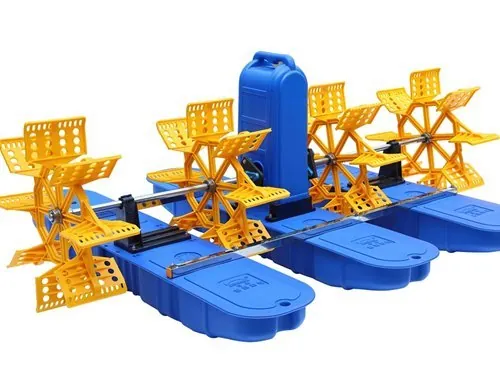
The blades splash water into the air to dissolve oxygen while the rotating wheels drive a strong circulating current that distributes DO, sweeps waste toward the centre drain and prevents stratification.
A floating paddle wheel aerator splashes and churns the pond surface to dissolve oxygen while driving a circular current that distributes DO and sweeps waste toward the drain. The 304 stainless frame with PP floats and impellers handles shrimp ponds and fish ponds from 0.75 kW up to 2.2 kW, with a curved bevel-gear drive that saves energy versus worm-gear designs.
15+ years in aquaculture engineering · Trusted by Japfa Group, Japan Nissui & Tropo Farms · Shipped worldwide in one container
Product Description
SIGMA Aquaculture's paddle wheel aerator transfers oxygen at 2.6 kg O₂/h while a mechanical seal keeps gearbox oil out of the culture water — surface aeration built for intensive ponds.
A paddle wheel aerator is a floating pond aerator whose rotating impellers splash water into the air to dissolve oxygen while driving a circulating current across the pond. In intensive, high-yield aquaculture the wheel aerator has become essential equipment: it raises dissolved oxygen where the stock needs it and keeps water moving so waste collects where it can be drained — which is why it appears on shrimp farming equipment lists worldwide.
The build is specific and verifiable. The motor is a 36-slot design wound with 2.35 kg of copper wire; every screw is #304 stainless steel; and the gear housing is high-grade cast iron with a painted finish. A mechanical seal ensures no oil leakage into the pond, so the aeration stays clean. Units are available for 110 V, 220 V and 380 V supply, and a solar paddle wheel aerator configuration can be quoted on request.
Surface aeration is one half of an oxygen plan. Ponds and large tanks run paddle wheels for circulation and daytime oxygen, while bottom aeration from a roots blower and diffuser grid covers depth; in framed vessels such as a PVC fish tank, verify the result on a multi-parameter water quality meter rather than by eye.
Advantage
High oxygen-transfer capability — 2.6 kg O₂/h — combined with a mechanical seal that cannot leak oil into the pond: efficient aeration without contaminating the water the fish live in.
Specifications
Model series integrated from the industry standard range — final ratings are confirmed by SIGMA's production line before shipment.
| Model | Capacity | Typical use | Core configuration |
|---|---|---|---|
| SIGMA-PWA-075 Inquire → | 0.75 kW (1 HP) · ≥1.6 kg O₂/h | Small–mid shrimp / fish ponds · 4,000–20,000 m² | 2 / 4 paddle |
| SIGMA-PWA-150 Inquire → | 1.5 kW (2 HP) · ≥2.6 kg O₂/h | Standard shrimp ponds · 12,000–40,000 m² | 4 paddle |
| SIGMA-PWA-220 Inquire → | 2.2 kW (3 HP) · ≥3.6 kg O₂/h | Large shrimp / intensive ponds · 16,000–48,000 m² | 4 / 6 paddle |
| SIGMA-PWA-M Inquire → | On request | High-density intensive culture · extra-large ponds | 6 / 8 paddle |
| Motor | Three-phase asynchronous / permanent-magnet synchronous DC (optional frequency-conversion control) |
|---|---|
| Gear drive | Curved arc-bevel gear (Cr-Mn-Ti alloy steel, carbonitrided) — ≥20% energy saving vs worm gear |
| Frame & shaft | 304 stainless steel |
| Floats & impellers | PP (polypropylene) |
| Voltage / frequency | 110 / 220 / 380 / 440 V · 50/60 Hz · single / three phase |
| Aeration efficiency | ≥1.25–1.5 kg O₂/(kW·h) |
| Water type | Freshwater / brackish water (shrimp ponds) |
| Options | Solar drive, frequency converter, extended arm, full stainless set |
System composition
The blades splash water into the air to dissolve oxygen while the rotating wheels drive a strong circulating current that distributes DO, sweeps waste toward the centre drain and prevents stratification.
Replaces the older worm-gear drive with a chrome-manganese-titanium alloy bevel gear, carbonitrided for hardness — higher efficiency and longer life.
Stainless frame and shaft with PP floats and impellers resist fresh- and brackish-water corrosion — the standard build for commercial shrimp ponds.
A mechanical seal prevents oil-leak pollution of the pond, and a built-in motor protector guards against accidental burnout.
2-, 4-, 6- or 8-impeller layouts cover pond areas from a few thousand up to ~48,000 m².
Permanent-magnet DC motors with frequency-conversion control and solar-powered versions suit off-grid and energy-sensitive farms.
Application
Gallery
Logistics
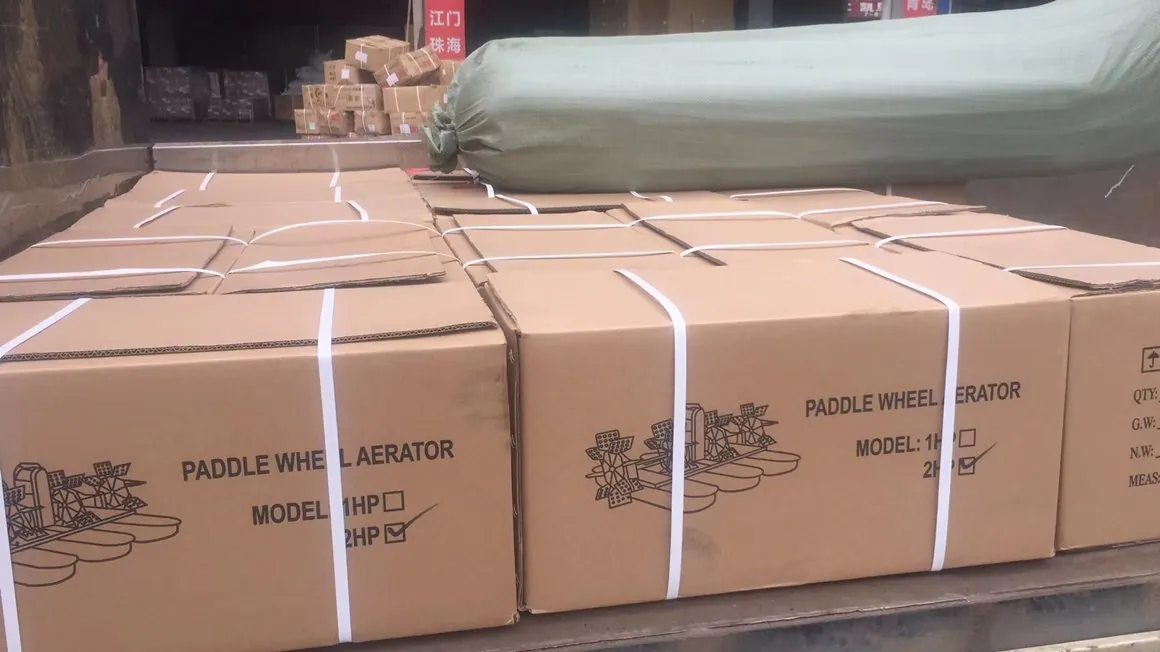
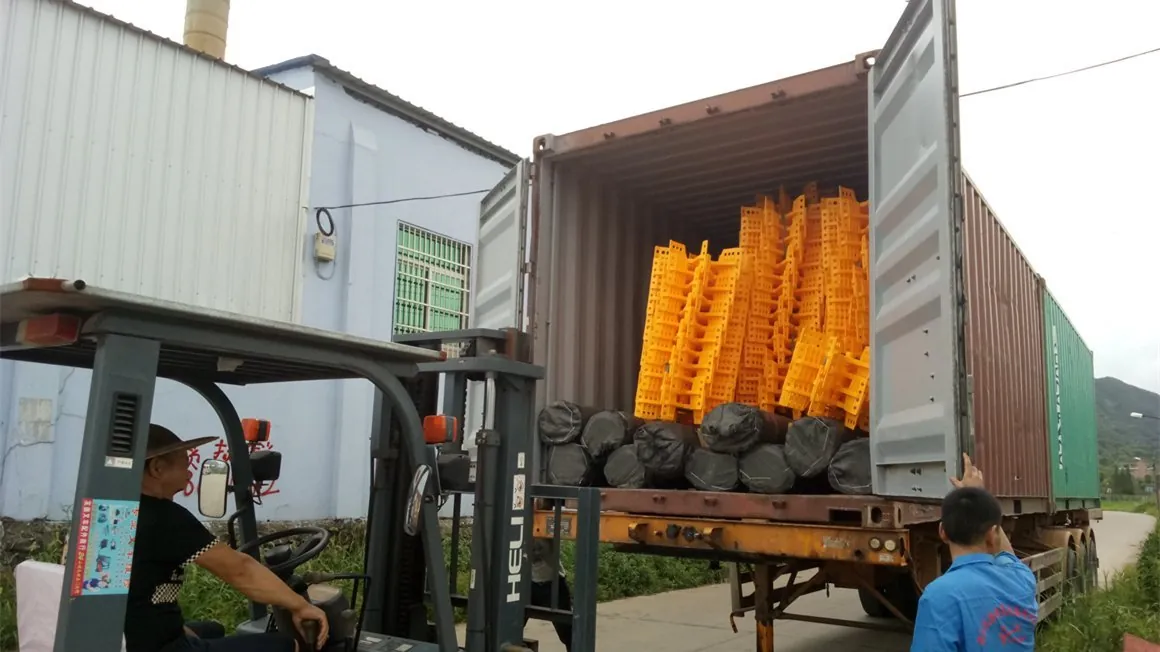
Aerators are packed in cartons (wooden boxes available), sea-freight suitable and loaded into containers; the minimum order is 5 sets.
FAQ
It is the standard aeration tool for open shrimp and fish ponds — the floating wheel splashes and churns the surface to dissolve oxygen while driving a strong circular current that mixes the pond and sweeps waste toward the centre drain.
SIGMA’s units use a curved arc-bevel gear drive in place of the older worm gear, cutting power consumption by roughly 20% over traditional designs.
Yes — optional permanent-magnet synchronous DC motors with frequency-conversion control and solar-powered versions are available for off-grid and energy-sensitive farms.
Configurations scale from 1 HP / 0.75 kW up to 2.2 kW in 2-, 4-, 6- or 8-impeller layouts, covering pond areas up to ~48,000 m².
The frame and shaft are 304 stainless steel with PP floats and impellers, resisting fresh- and brackish-water corrosion; a mechanical seal prevents oil-leak pollution.
Yes — an aerator for biofloc can be a paddle wheel when the system is run in an open or semi-open pond format. The paddle wheel provides both dissolved oxygen and the surface agitation that keeps floc particles suspended and prevents stratification. However, in enclosed circular biofloc tanks a roots blower feeding bottom nano diffusers is more common, as it provides uniform bottom aeration without the surface disturbance. For open biofloc ponds, SIGMA's 1–2.2 kW paddle wheel aerators are the standard choice.
A submersible aerator pump sits underwater and forces air through a venturi or diffuser to inject bubbles, while a paddle wheel aerator floats on the surface and splashes water into the air. The paddle wheel's larger air-water contact area and stronger circulating current is why it remains the standard for open shrimp and fish ponds; a submersible aerator pump suits smaller tanks or spot aeration where surface splash isn't wanted.
Related equipment
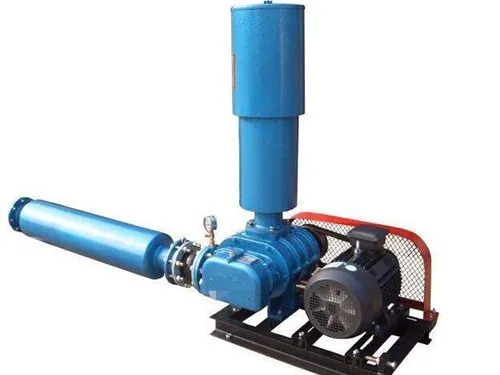
High-efficiency roots blowers for biofloc, RAS & pond aeration. Direct-from-factory pricing, multiple capacities, worldwide export from SIGMA.
View details →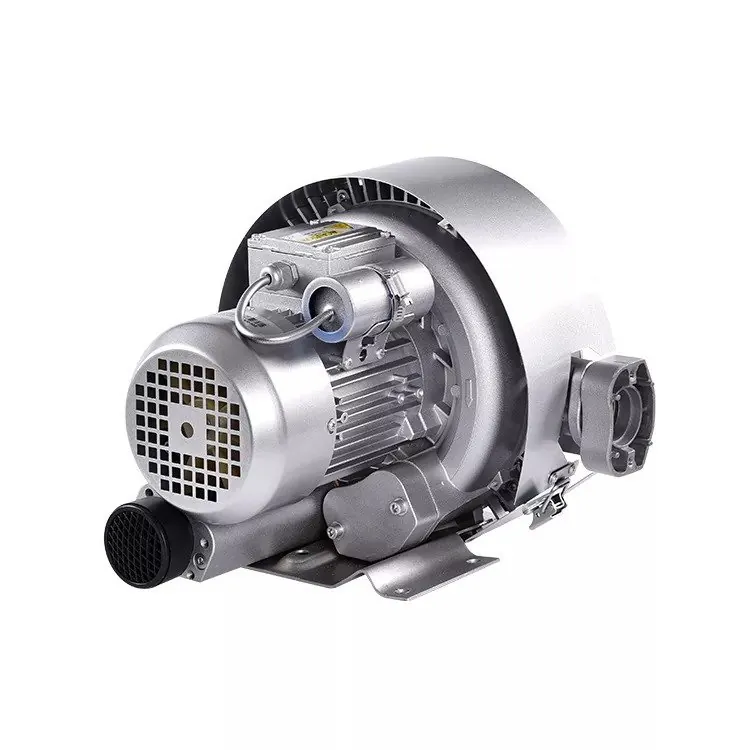
High-pressure regenerative (ring) blowers for aquaculture aeration, RAS & biofloc — oil-free, quiet, energy-efficient. Multiple capacities, factory-direct.
View details →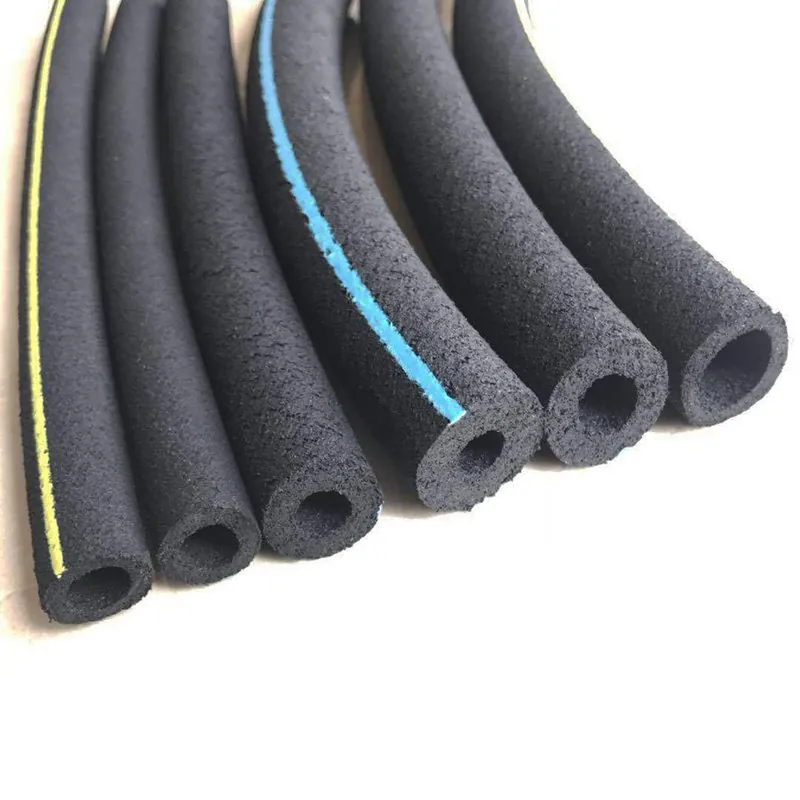
Micro/nano-bubble oxygen diffuser pipes & aeration hose for biofloc and pond fish farming — fine bubbles, high oxygen transfer, clog-resistant. Factory-direct.
View details →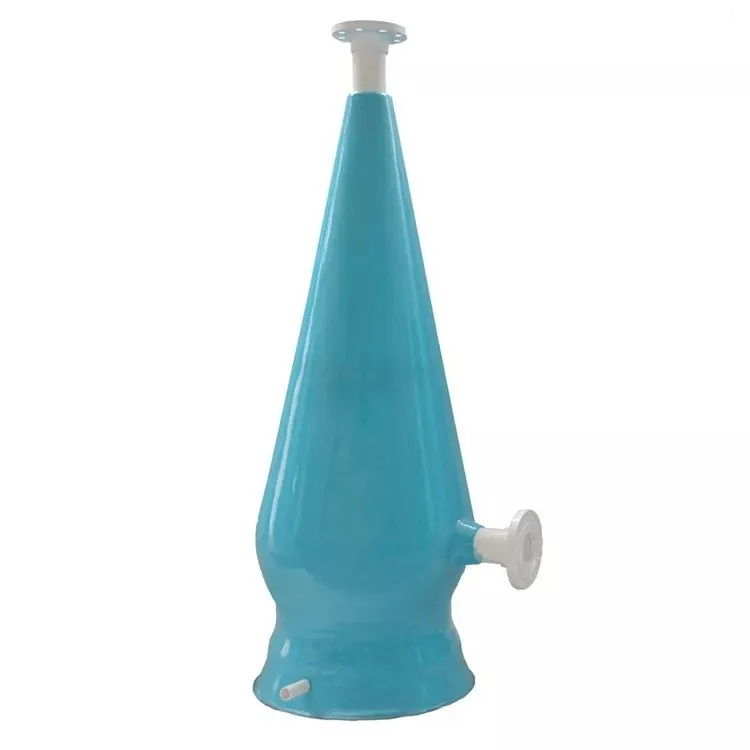
Oxygen / Speece cones that dissolve pure O2 for high-density RAS & biofloc farms. High transfer efficiency, multiple capacities. Manufacturer-direct from SIGMA.
View details →
Solar pond aerator system pairs a solar panel and battery bank with a paddle wheel or air pump, running off-grid pond aeration day and night.
View details →Tell us your species, target density and site — our engineers size the system and reply within one business day.