Trichodina in Tilapia: Symptoms, Diagnosis & Control
Trichodina is a ciliate parasite that flares up in dirty, crowded tilapia ponds. Spot the symptoms, confirm it under a microscope and treat it for good.
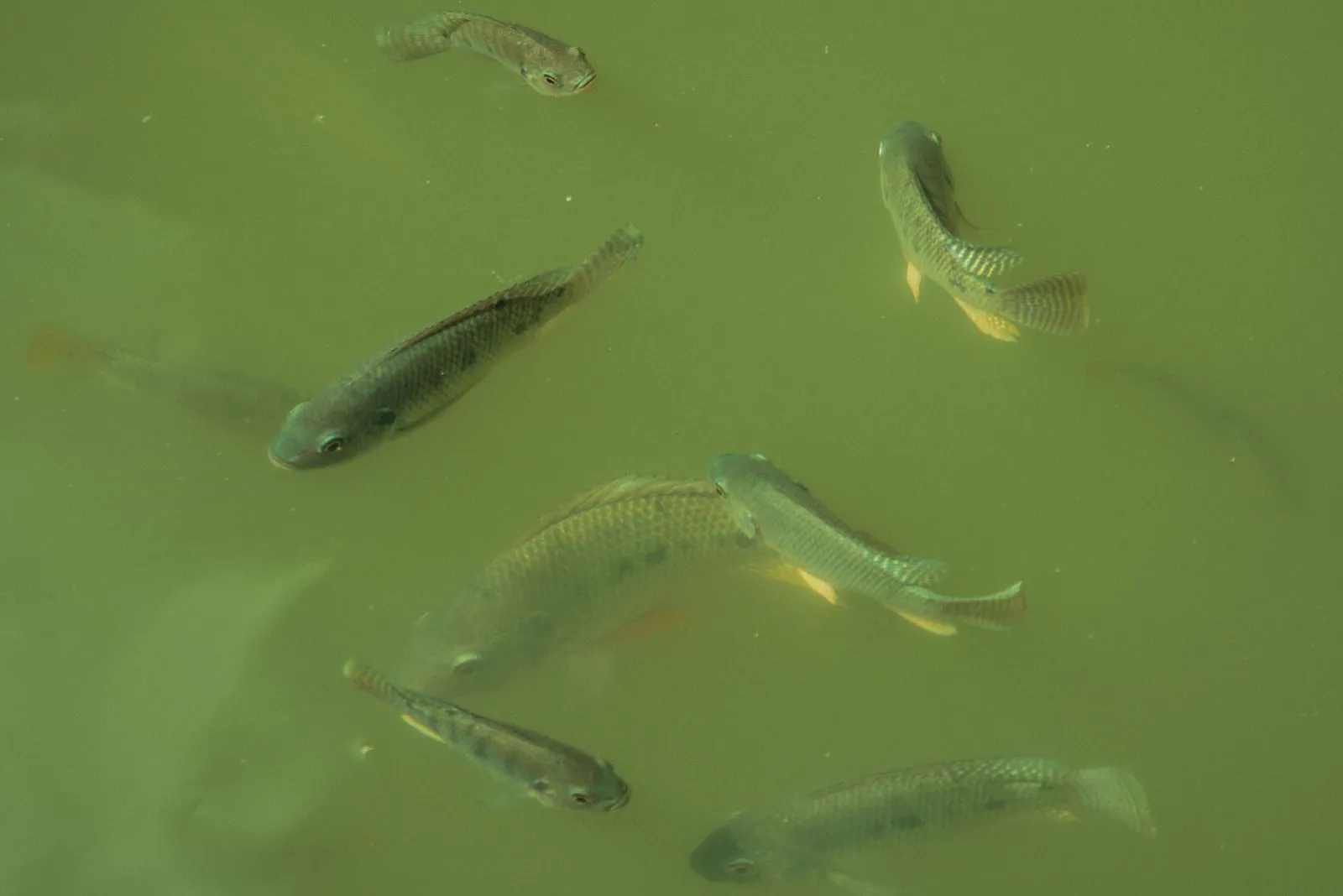
Trichodina is a single-celled ciliate parasite that lives on the skin and gills of tilapia. Under a microscope it looks like a tiny spinning disc, ringed with hooks (a denticulate ring) that it uses to grip and scrape the fish. A few of them do little harm — Trichodina is on almost every pond fish at low numbers. The problem starts when the water goes bad and they multiply into the thousands, rasping away the slime coat and gill tissue until the fish stops eating and starts dying.
If you farm tilapia long enough, you will meet trichodiniasis. It is one of the first parasites we get asked about by customers in Ghana, Egypt and across Southeast Asia, and it almost always shows up on the same kind of farm: high stocking density, heavy feeding, and water that has not been cleaned or oxygenated enough. That last detail is the whole story, and we will come back to it.
What Trichodina actually is
Trichodina is a genus of mobile peritrich ciliates. Each cell is a flat disc, 30–100 µm across, with a crown of cilia that drives it spinning across the fish’s surface, and an internal ring of tooth-like denticles — the part you learn to recognise down the microscope. It feeds on bacteria, organic debris and host cells, which is why it thrives where organic load is high.
It is not host-specific. The same parasite jumps between tilapia, catfish, carp and ornamental fish, and it spreads directly from fish to fish — no intermediate host, no complicated life cycle. That is what makes it explode so fast in a crowded tank: one stressed, infected fish can seed the whole batch within days.
Symptoms: how to know it’s Trichodina
Trichodina damages the skin and gills, so the signs are the signs of an irritated, suffocating fish:
- Flashing and rubbing — fish dart and scrape their flanks against the pond wall, net or bottom, trying to relieve the itch. This is usually the first thing a farmer notices.
- Excess mucus — a greyish-white, bluish film over the body as the fish over-produces slime to defend itself. Heavy infections give the skin a dull, cloudy sheen.
- Frayed, pale or haemorrhagic gills — the most dangerous site. Damaged gills can’t take up oxygen.
- Piping at the surface — fish gasping at the top, especially at dawn, because their gills are wrecked and the dawn oxygen dip finishes the job.
- Loss of appetite and lethargy — feeding response drops off, growth stalls, fish hang in corners.
- Scale loss, skin lesions, secondary infections — the open wounds let bacteria and fungus in behind the parasite.
Fingerlings and fry in hatcheries are hit hardest. In a nursery the losses can run to whole tanks if it’s caught late, which is why hatchery operators screen for it routinely.
Diagnosis: you have to see it
You cannot diagnose Trichodina by eye — flashing and mucus look the same for several parasites. You confirm it under a microscope, and it is one of the easiest parasites to identify once you’ve seen it.
- Take a fresh fish (or a freshly dead one, within minutes).
- Scrape a little mucus from the skin, or snip a small piece of gill, and make a wet mount on a slide with a drop of pond water.
- Look at 100–400×. Trichodina shows up as a clear disc spinning and tumbling like a tiny merry-go-round, with that distinctive ring of denticles inside. It keeps moving on the slide for a while — the motion is the giveaway.
Count rough numbers while you’re there. A few per field is normal carriage; a slide crowded with spinning discs on a fish that’s flashing and off its feed is an active outbreak that needs treating now.
Why it flares up: the water is the real cause
Here is the part most “treatment” articles skip. Trichodina is opportunistic. It is almost always present at harmless levels; an outbreak is a symptom that the pond’s environment has tipped in the parasite’s favour. The triggers are consistent:
- Poor water quality — high ammonia and nitrite, low pH swings, accumulated waste. This stresses the fish and feeds the parasite at the same time.
- High organic load — uneaten feed, faeces and dead algae are exactly what Trichodina grazes on. A dirty pond is a breeding ground.
- Overcrowding — high stocking density means more host contact and more waste per litre.
- Low dissolved oxygen — stressed, oxygen-starved fish have weakened immunity and damaged gills the parasite exploits.
So you can chemically knock the parasite down and it will come straight back in two weeks if the water is still dirty and crowded. The lasting fix is environmental. This is where farm equipment stops being optional:
- You can’t manage what you can’t measure. A multi-parameter water quality meter tells you the ammonia, dissolved oxygen and pH behind the outbreak — start there, because in a sick pond the water is the diagnosis.
- Outbreaks track low oxygen. Reliable aeration — a root blower feeding the pond, or a dissolved oxygen cone where you need to push DO hard in intensive systems — keeps fish strong and gills healthy.
- Organic load is the parasite’s food. An automatic rotary drum filter strips out the suspended solids — uneaten feed and faeces — that feed a Trichodina bloom.
- A UV pass: a UV steriliser on a recirculating loop knocks down the free-swimming parasites and the secondary bacteria moving through the water column.
- Build a microbial community that competes with the parasite’s food supply with aquaculture probiotics — a cleaner, more stable pond is a poorer home for Trichodina.
Treatment: knock it down, then fix the cause
When fish are flashing, off feed and dying, you treat the parasite directly — but treatment buys you time to fix the water, it does not replace it. Standard, evidence-based options for tilapia:
- Salt (NaCl) bath — the safest first line and the one we recommend to farmers without lab support. A short, intense bath of about 0.6% (6 kg salt per 1,000 L) in a separate tank, watching the fish closely, or a milder prolonged dose in the pond. Salt is cheap, leaves no residue, and tilapia tolerate it well.
- Formalin — historically dosed at 30–50 mg/L as a bath, very effective against Trichodina. But formalin is hazardous, strips oxygen from the water (run aeration hard during treatment), and is restricted or banned for food fish in many countries. Check your local regulations before you reach for it.
- Potassium permanganate (KMnO₄) — about 5 ppm for 10–15 minutes as a bath, also restricted in many places. Never mix it with salt — salt makes permanganate far more toxic to the fish.
Two rules from experience. First, always treat in a separate hospital tank or a measured pond dose with full aeration — every one of these chemicals lowers dissolved oxygen, and a Trichodina-weakened fish is already short of it. Second, re-test the water and fix the cause the moment the fish are stable, or you’ll be treating the same pond again next month.
For a wider view of how water quality drives parasite and bacterial outbreaks across the farm, see our guide to common tilapia diseases and the role of water quality, and the related write-up on monogenean gill flukes in tilapia, the other parasite that rides in on the same dirty water. If you’re moving toward a system that controls water quality by design, our biofloc water management guide covers the bacterial approach.
Prevention beats treatment
The farms that don’t fight Trichodina year after year do the same boring things:
- Keep stocking density sane for the aeration and filtration you actually have.
- Don’t overfeed; clear waste and dead algae out of the system.
- Hold dissolved oxygen above ~5 mg/L and watch the dawn dip.
- Quarantine and screen new fingerlings before they go in the main pond.
- Test the water on a schedule, not just when fish are already dying.
Trichodina is, in the end, a report card on your water. Read it that way and you treat the pond, not just the fish.
Frequently asked questions
What are the signs of Trichodina in tilapia?
Infected fish eat less, flip back and forth, swim as if in pain, and rub their bodies against the pond walls in an attempt to scrape off the parasites.
How is Trichodina in tilapia treated?
Treatment is formalin at 25–50 cc per 1000 litres of water, which may be repeated as necessary until no Trichodina are detectable.
How do you confirm the fish are clear of Trichodina?
By skin scrapes — the treatment is repeated until no Trichodina can be detected via skin scrapes.
Put this into practice on your farm
Tell our engineers your species, target density and site — we will size the system and reply within one business day.
More to explore
- What Is Biofloc Technology and How Does It Work?
- Fish Feed Types: Floating vs Sinking Pellets for Aquaculture
- White Spot Disease in Shrimp (WSSV): Prevention & Biosecurity
- Bacterial & Fungal Diseases in Sturgeon: Symptoms & Control
- Columnaris and Parasitic Diseases in Catfish
- Water Quality & Fish Disease: Why Most Outbreaks Start in the Water
Building a system from what you read here? Ask our engineers for a tailored plan →