Columnaris and Parasitic Diseases in Catfish
Columnaris (Flavobacterium columnare) rots catfish gills and fins, while Ich, Trichodina and flukes ride in on the same dirty water. Diagnose and treat.
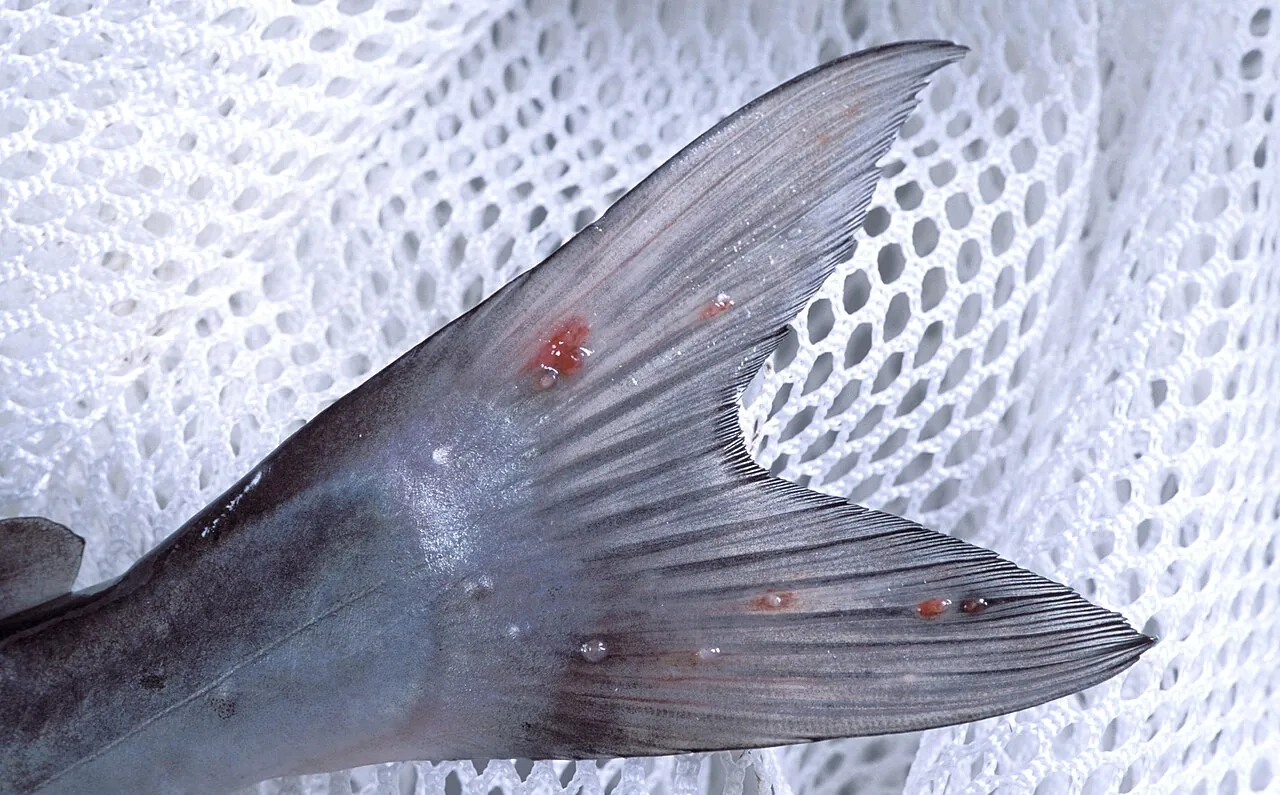
Two kinds of trouble take catfish in the same kind of pond, and they usually arrive together. The first is columnaris — a bacterial rot caused by Flavobacterium columnare that eats the gills, skin and fins. The second is a crew of external parasites — white spot (Ichthyophthirius, “Ich”), Trichodina, the skin and gill flukes (Gyrodactylus and Dactylogyrus), and the anchor worm (Lernaea) — that graze the skin and gills, open the wounds, and let the bacteria in behind them. On a real farm you rarely get to deal with one at a time.
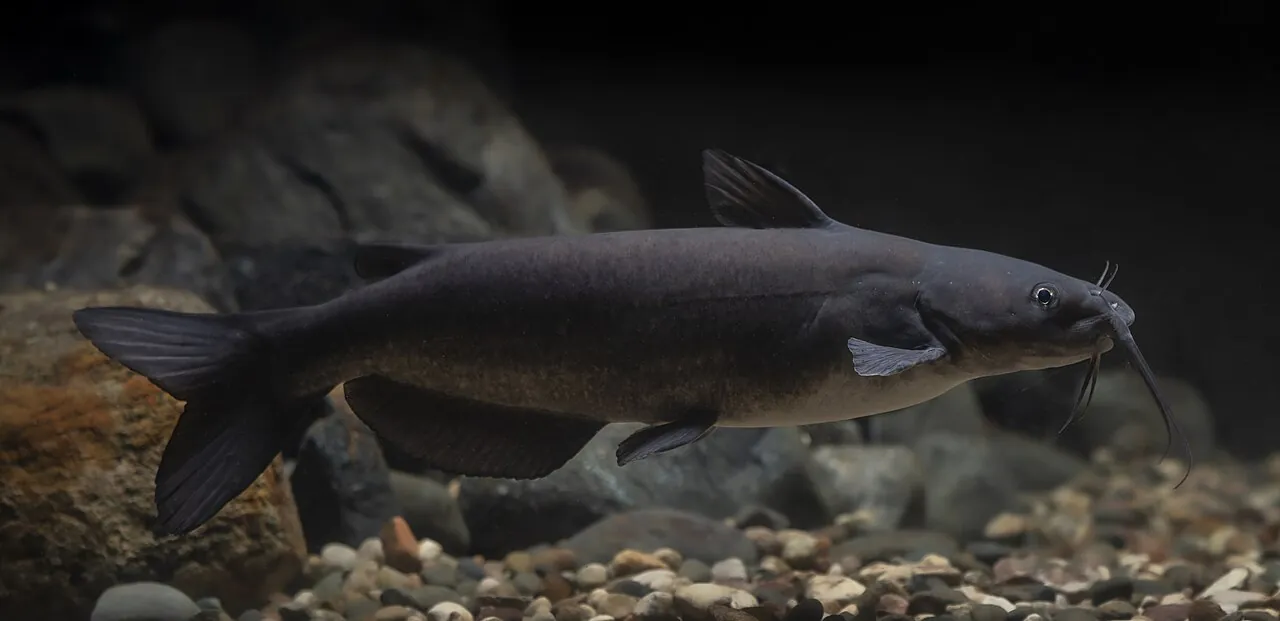
We see this most on the farms our customers run in Indonesia, Vietnam, Nigeria and across the tropics — African catfish (Clarias) in earthen ponds and concrete tanks, Pangasius (pangasius, basa, tra) in cages and ponds. Catfish are tough, hardy fish, which is exactly why farmers push the stocking density and the feed load until the water can’t keep up. That is when columnaris and the parasites move in. Both are, in the end, a report card on the water — and we’ll come back to that.
Columnaris: the gill-and-fin rot
Columnaris is caused by Flavobacterium columnare (older names: Flexibacter columnaris, Cytophaga columnaris), a long, thin, Gram-negative rod present in nearly all fresh water. From a fresh lesion under the microscope the bacteria pile into the haystacks or “columns” that give the disease its name, with a slow gliding, flexing motion.
In catfish it shows up as:
- Greyish-white or yellow-brown patches on the skin, often with a cottony, mould-like fuzz at the edge — bacterial mats, not true fungus, which is why it’s called “cotton wool disease.”
- Frayed, eroded fins and a rotting mouth — “fin rot” and “mouth rot,” the lips going pale and ragged.
- Pale, swollen, necrotic gills — the most dangerous site. Gill columnaris kills fast and may show almost no skin signs before fish start dying.
- Off feed, lethargy, gasping at the surface — wrecked gills can’t take up oxygen, so fish pile at the surface or the inlet, worst at dawn.
It is an opportunist that lives on the slime coat all the time. It does not need a wound to start, but it loves one — and that is exactly what the parasites provide. A patch of gill already chewed by Trichodina or a fluke, an anchor-worm hole, a net scrape: that is the doorway columnaris waits for. Treat the parasites and you shut the door.
The parasite crew: what’s grazing your catfish
White spot / Ich (Ichthyophthirius multifiliis)
The one farmers recognise: pinhead white spots like grains of salt scattered over the skin, fins and gills, with flashing and rubbing as the fish try to dislodge them. Ich is a ciliate with a three-stage life cycle, and that cycle is the whole reason it’s hard to kill:
- The trophont feeds buried in the skin and gills — protected, you can’t reach it.
- It drops off as a tomont, settles, and forms a tough cyst that churns out hundreds of larvae — also protected.
- Those larvae hatch as free-swimming theronts that must find a fish within hours — and this is the only stage chemicals can kill.
So a single dose never clears Ich. You have to dose, and repeat to catch each new wave of theronts as it hatches, until the cyst bank in the pond is spent. Warm water speeds the whole cycle up — about 7 days at 25 °C — which means in a tropical catfish pond it cycles fast and you treat on a tight schedule.
Trichodina and the flukes (Gyrodactylus, Dactylogyrus)
These you confirm under a microscope, not by eye. Trichodina is a spinning, disc-shaped ciliate that rasps the skin and gills. Gyrodactylus is a live-bearing skin fluke; Dactylogyrus is an egg-laying gill fluke with four eyespots and a pair of anchors on its tail. All of them cause the same surface signs — flashing, excess greyish mucus, frayed fins, pale or ragged gills, gasping — and all of them thrive when the organic load climbs. The egg-laying gill fluke, like Ich, needs repeat treatment, because its eggs survive a single bath.
Anchor worm (Lernaea)
Not a worm at all — a parasitic copepod (crustacean). The female burrows head-first into the catfish’s flesh, anchors with a holdfast, and hangs out of the skin as a visible thread, often with a red, inflamed ulcer at the attachment point. Those holes are open doors for columnaris and fungus. Lernaea has an 18–25 day life cycle at 25–30 °C, with a free-swimming juvenile stage that is the only one a chemical reaches — so, like Ich and gill flukes, anchor worm needs repeated treatment to break the cycle. It loves warm, stagnant or slow water, which is the tell: a pond with poor circulation is an anchor-worm pond.
Diagnosis: scope first, then water
Flashing, mucus and gasping look the same for Ich, Trichodina, flukes and simple low oxygen, and a rotting fin could be columnaris or fungus. You cannot treat blind:
- Take a fresh, sick (not long-dead) fish. Scrape skin mucus and snip a gill clip; pick off any visible anchor worms.
- Wet mount under the microscope. Salt-grain white spots and large round ciliates = Ich; spinning discs = Trichodina; worm-like bodies with hooks/anchors = flukes; columnaris shows as long rods in haystack “columns” along the tissue edge at 200–400×.
- Then measure the water. A multi-parameter water tester reads the temperature, ammonia, nitrite, dissolved oxygen and pH behind the outbreak. In a sick catfish pond the water is the diagnosis — and treating fish blind on top of bad water is how you turn an outbreak into a wipe-out.
Why it all flares up: the same dirty water
Here is the part the “what medicine do I use” articles skip. Columnaris and every one of these parasites is normally present at harmless levels. An outbreak means the pond has tipped in their favour — and the triggers are the same for all of them:
- Poor water quality — high ammonia and nitrite, pH swings, accumulated waste stress the fish and feed the bacteria at the same time.
- High organic load — uneaten feed, faeces and dead algae on the bottom are exactly what Flavobacterium and the skin parasites graze on. A dirty pond is a culture flask.
- Low dissolved oxygen — catfish tolerate low oxygen better than most fish, which is why farmers overstock them and the DO crashes; stressed, oxygen-starved fish have weak immunity and damaged gills.
- Overcrowding and handling stress — high density means more contact, more waste, and grading and netting scrape the slime coat open.
- Temperature stress — warm water makes columnaris sharply more aggressive and speeds up the Ich and anchor-worm cycles; a heat spell or a sudden swing sets the whole thing off.
So you can dose the pond and knock it all back, and it returns in two weeks if the water is still dirty, crowded and low on oxygen. The durable fix is environmental. This is where farm equipment stops being optional:
- Strip the organic load the bacteria and parasites feed on. An automatic rotary drum filter pulls out the suspended solids — uneaten feed and faeces — continuously, and a biological filter converts the ammonia and nitrite behind the stress instead of letting it climb.
- Keep oxygen high. Damaged gills can’t extract oxygen, so the fish need more in the water, not less — a root blower on the aeration grid, or a dissolved oxygen cone where you need to push DO hard in intensive Clarias or Pangasius systems, keeps fish strong enough to fight back. Good circulation also denies anchor worm the stagnant water it needs.
- A UV pass: a UV steriliser on a recirculating loop knocks down the free-swimming Ich theronts, fluke larvae and free Flavobacterium moving through the water column — exactly the vulnerable window in each parasite’s cycle.
- Build a microbial community that competes with the parasites’ food supply with aquaculture probiotics — a cleaner, more stable pond is a poorer home for all of them.
Treatment: knock it down, then fix the cause
Treat the parasite and the bacterium directly when fish are flashing, spotted, off feed and dying — but treatment buys time to fix the water, it does not replace it. Standard, evidence-based options for catfish:
- Salt (NaCl) bath — the safest, cheapest first line, and catfish like Clarias tolerate it well. It helps against Trichodina, flukes and anchor worm, supports columnaris-stressed fish through osmotic balance, and leaves no residue. A prolonged low dose in the pond or a stronger short bath in a separate tank.
- Formalin — a standard external bath against Ich, Trichodina and flukes (typically dosed around 25 ppm prolonged in the pond or a stronger short bath). It strips oxygen from the water, so run heavy aeration throughout and never use it on already-gasping fish; it is restricted or banned for food fish in many countries, so check your local rules.
- Potassium permanganate (KMnO₄) — about 2 ppm as a prolonged pond treatment against external columnaris, Trichodina and flukes. Dose against the pond’s organic demand, watch the colour, and never mix it with salt — salt makes permanganate far more toxic to the fish.
- Repeat for the egg- and cyst-layers. Ich, the gill fluke and anchor worm all survive a single dose because part of their cycle is protected. Plan on repeat treatments — every few days for Ich, weekly for flukes and anchor worm — until the cycle is broken. One dose is never enough for these three.
- Antibiotics for systemic columnaris — once columnaris is internal (septicaemia, fish off feed but you still have eaters), in-feed florfenicol or oxytetracycline at roughly 55–83 mg/kg fish/day for 10 days are the standard choices. Use them on a confirmed diagnosis, ideally with sensitivity testing, observe the withdrawal period for food fish, and never as a routine preventive — blanket dosing is how resistance builds.
Two rules from experience. First, aerate hard during any external treatment — formalin, KMnO₄ and a heavy organic load all pull oxygen, and a fish with rotting or parasite-chewed gills is already short of it. Second, re-test the water and remove the cause — drop the load, ease the density, get the circulation moving — the moment fish are stable, or the same pond is back on the list next month.
For the wider picture on the bacterial side of catfish disease, see our guide to enteric septicaemia of catfish (ESC), the internal bacterial killer that rides in on the same conditions, and the common catfish farming mistakes that set all of this up. Columnaris also hits tilapia hard — see columnaris disease in tilapia, the same bacterium in a different fish — and for why water quality sits under every one of these outbreaks, water quality and fish disease ties it together.
Prevention beats treatment
The catfish farms that don’t fight columnaris and parasites every cycle do the same boring things:
- Keep stocking density sane for the aeration and filtration you actually have — catfish tolerate crowding, but the parasites and bacteria love it.
- Don’t overfeed; clear waste and dead algae off the bottom, and keep the water moving so anchor worm has nowhere to settle.
- Stay on top of the parasites — treat Trichodina, flukes, Ich and anchor worm before they open wounds for columnaris.
- Handle, grade and transport gently; every scrape is a doorway.
- Hold dissolved oxygen up and watch the dawn dip, even though catfish “can take” low oxygen.
- Quarantine and screen new fingerlings — Ich and anchor worm almost always arrive on incoming fish.
Catfish are hardy, but hardy is not invincible. Columnaris and the parasites are what a pushed, dirty, crowded pond looks like — read the water, treat the pond, not just the fish.
Frequently asked questions
What is columnaris in catfish?
Columnaris is a bacterial disease caused by Flavobacterium columnare. In catfish it rots the gills, skin, fins and mouth, leaving greyish-white or yellow-brown patches with a cottony, mould-like edge (hence "cotton wool disease"). Gill columnaris kills fast with few skin signs. It is a warm-water opportunist that flares in dirty, crowded ponds, often after a parasite or net injury opens the door.
What parasites affect catfish?
The common external ones are white spot / Ich (Ichthyophthirius — salt-grain white spots), Trichodina (a spinning ciliate), the skin and gill flukes Gyrodactylus and Dactylogyrus, and the anchor worm Lernaea (a copepod that burrows into the skin). All graze the skin and gills, cause flashing and mucus, and open wounds for columnaris.
Why does Ich keep coming back in catfish ponds?
Because only the free-swimming theront stage can be killed by chemicals; the feeding stage on the fish and the cyst stage in the pond are protected. You have to repeat treatment to catch each new wave of theronts as it hatches. Warm water speeds the cycle (about 7 days at 25 °C), so tropical ponds need a tight repeat schedule.
How do you treat parasites and columnaris in catfish?
Salt baths, formalin (~25 ppm prolonged) and potassium permanganate (~2 ppm prolonged) treat external parasites and superficial columnaris; Ich, gill flukes and anchor worm need repeat doses because part of their cycle is protected. Systemic columnaris needs in-feed antibiotics (florfenicol, or oxytetracycline ~55–83 mg/kg/day for 10 days) on a confirmed diagnosis. Aerate hard during any treatment, never mix salt with potassium permanganate, and fix the water quality or it all comes back.
What causes columnaris and parasite outbreaks in catfish?
Poor water quality, high organic load, low dissolved oxygen, overcrowding, handling injuries and temperature stress. The bacteria and parasites are always present at low levels, so an outbreak is a sign the pond's load, density and oxygen need fixing — chemicals alone won't keep them away. Stagnant water in particular invites anchor worm.
Put this into practice on your farm
Tell our engineers your species, target density and site — we will size the system and reply within one business day.
More to explore
- What Is Biofloc Technology and How Does It Work?
- Fish Feed Types: Floating vs Sinking Pellets for Aquaculture
- Trichodina in Tilapia: Symptoms, Diagnosis & Control
- White Spot Disease in Shrimp (WSSV): Prevention & Biosecurity
- Bacterial & Fungal Diseases in Sturgeon: Symptoms & Control
- Water Quality & Fish Disease: Why Most Outbreaks Start in the Water
Building a system from what you read here? Ask our engineers for a tailored plan →