Common Tilapia Diseases & the Farm-Management Mistakes Behind Them
A field guide to the bacterial, parasitic and viral diseases of tilapia — plus the everyday farming mistakes that let them spread, and how to stop them.
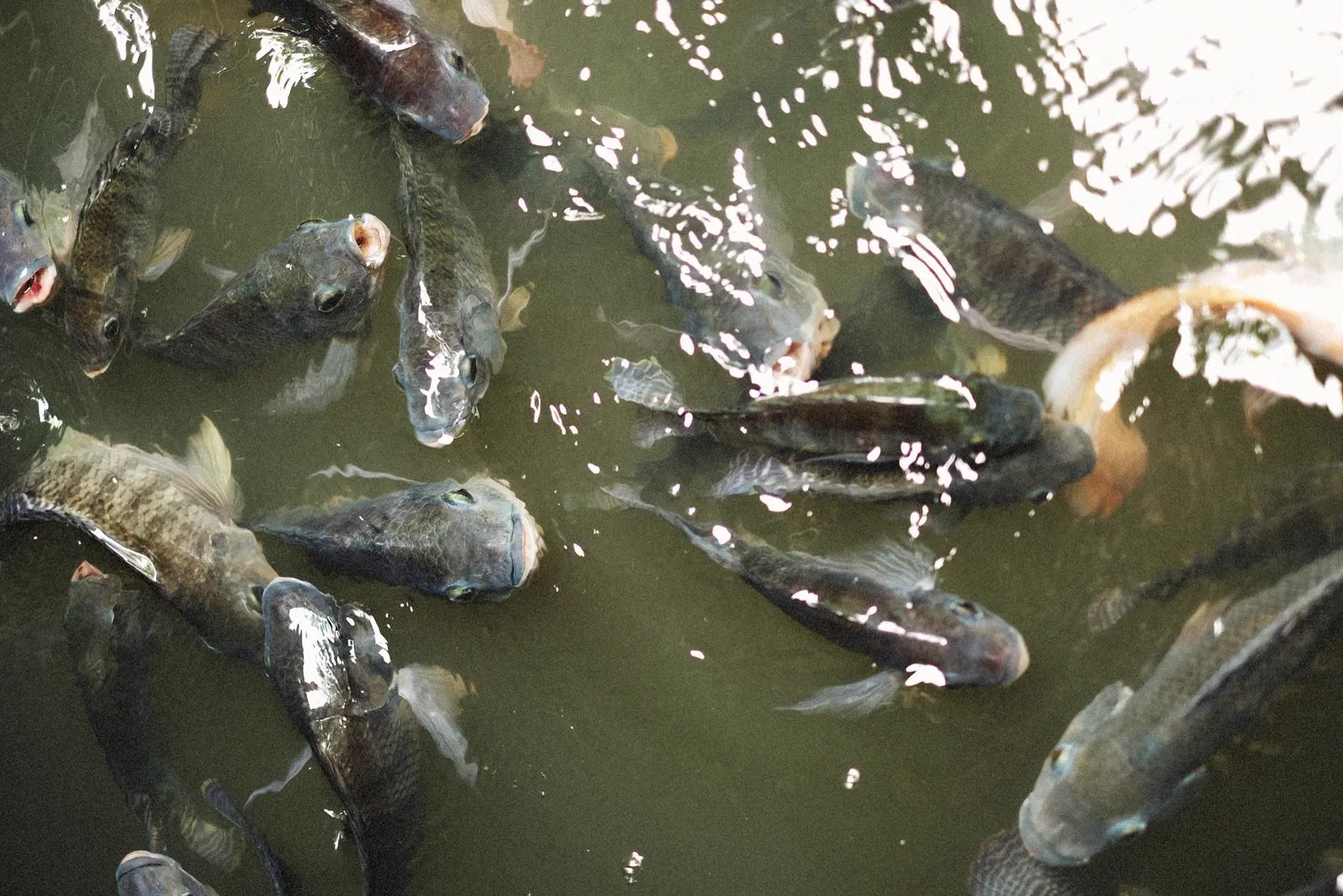
Tilapia is one of the hardiest farmed fish on earth — which is exactly why so many farmers get blindsided when it starts dying. A disease outbreak in a tilapia pond is almost never bad luck. It is the pond telling you that something in the way it is run has gone wrong: too much feed, too little oxygen, too many fish, or new stock that brought a pathogen in through an open gate.
We export aquaculture equipment to tilapia farms in Ghana, Egypt, Indonesia and across Latin America, and the same few diseases come up again and again in the photos customers send us. This guide does two things. First, it walks through the bacterial, parasitic, viral and fungal diseases you are most likely to meet, with the symptoms that let you spot each one. Then — the part that actually saves fish — it lists the eight everyday management mistakes that let those diseases take hold, and the fix for each.
If you only remember one sentence, make it this: you don’t treat your way out of a disease problem, you manage your way out of it.
Part A — The common tilapia diseases, at a glance
Tilapia diseases fall into four groups by what causes them: bacteria, parasites, viruses and fungi. Here is how to recognise the big ones.
Bacterial diseases
Streptococcosis (Streptococcus) — the bacterial disease that costs tilapia farmers the most money worldwide. Caused mainly by Streptococcus agalactiae and S. iniae, it attacks the brain and nervous system. The tell-tale signs are fish swimming in spirals or corkscrews, popped or cloudy eyes (exophthalmia), a darkened body and fish hanging listlessly near the surface. It flares hardest in warm water — outbreaks usually hit when temperatures climb above about 28–30 °C. → Full guide: Streptococcus in tilapia.
Motile Aeromonas Septicemia (Aeromonas) — caused by Aeromonas hydrophila and its relatives, which live in every pond and turn deadly when fish are stressed. The classic picture is haemorrhagic: red blotches at the base of the fins, open ulcers on the flanks, a swollen belly full of fluid (dropsy) and ragged fins. It is the textbook “dirty water plus stressed fish” bacterial disease. → Full guide: Aeromonas (MAS) in tilapia.
Columnaris (Flavobacterium columnare) — a bacterium that eats away at skin and gills. Look for greyish-white or yellowish patches, a classic “saddleback” lesion across the back, frayed fins and pale, rotting gills. It moves fast in warm, crowded water and is often mistaken for a fungus. → Full guide: Columnaris disease in tilapia.
Parasitic diseases
Trichodina — a single-celled ciliate that lives on the skin and gills. Fish flash and rub against surfaces, over-produce a greyish mucus film, and gasp at the surface because their gills are damaged. It is a pure “dirty, crowded water” parasite. → Full guide: Trichodina in tilapia.
Monogeneans (gill and skin flukes) — Dactylogyrus and Gyrodactylus, tiny worms that grip the gills and skin with hooks. Fish flash, breathe heavily, and the gills look swollen and slimy. They ride in on the same poor water and crowding as Trichodina. → Full guide: Monogenean parasites in tilapia.
Ich / white spot (Ichthyophthirius multifiliis) — a larger ciliate that burrows under the skin, leaving white spots like grains of salt scattered over the body and fins. Infected fish go off feed, sit on the bottom and breathe hard if the gills are hit. It only multiplies in the water, so it explodes in stagnant, dirty tanks.
Viral disease
Tilapia Lake Virus (TiLV) — the one that keeps farmers awake at night, because there is no treatment. Confirmed by the World Organisation for Animal Health (WOAH), TiLV causes mass die-offs of 10–90 % in fry, juveniles and adults, and spreads most readily around 25 °C. Signs are non-specific: loss of appetite, lethargy, fish that stop schooling, bulging eyes, reddened or ulcerated skin, and a swollen belly. Because it looks like a bad bacterial outbreak, it is widely under-reported. The only defence is biosecurity — sourcing clean fingerlings and keeping the virus out, which is exactly what Part B is about.
Fungal disease
Saprolegnia (water mould) — the cottony grey-white fuzz that grows on skin, fins and eggs. Fungus almost never attacks healthy fish; it is a secondary invader that settles on wounds, on fish weakened by another disease, or on stock chilled by cold water. If you are seeing Saprolegnia, the real question is what damaged the fish first.
Notice the pattern running through every one of these: the pathogens are mostly already present in the pond, and they turn into a disease only when management lets them. That is the whole point of Part B.
Part B — The eight management mistakes that cause tilapia disease
Here is the uncomfortable truth from years of farm visits: in the great majority of outbreaks, the pathogen didn’t cause the disease — the farmer’s routine did. Below are the eight mistakes we see most often, what each one does to the fish, and how to fix it.
Mistake 1 — Overfeeding
The single most expensive habit in tilapia farming. Feed that fish don’t eat doesn’t disappear — it rots on the bottom, spikes ammonia and nitrite, strips oxygen out of the water, and becomes the exact organic load that Trichodina, monogeneans and Aeromonas feed on. Overfeeding doesn’t just waste money; it builds the disease.
Do this instead: feed to appetite, not to a fixed number. Give what the fish clear in a few minutes, watch the response, and cut back the moment they slow down. Stop feeding before a known stress event (handling, low oxygen, a heatwave).
Equipment: a demand feeder or automatic fish feeder delivers small, even portions on a schedule instead of one heavy dump, which keeps waste — and the disease risk that rides on it — far lower.
Mistake 2 — Not testing the water
You cannot manage what you cannot measure, and “the fish look fine” is not a measurement. Ammonia, nitrite, pH and dissolved oxygen can all be lethal long before the fish show it, and by the time they do, the outbreak is already running. Farmers who only test after fish start dying are always one step behind.
Do this instead: test on a schedule — not just in a crisis. Track ammonia, nitrite, pH and DO so you see the trend before it becomes an outbreak.
Equipment: a multi-parameter water quality tester reads the parameters that drive almost every disease on this page, in one device. It is the cheapest insurance on the farm.
Mistake 3 — Leaving oxygen to luck
More tilapia die from low dissolved oxygen than from any single pathogen — and low oxygen also weakens the immune system, which is what lets the pathogens in. Relying on wind and weather to oxygenate the pond means the fish are most stressed at exactly the worst time: the dawn oxygen dip, when DO bottoms out and the weak fish suffocate.
Do this instead: hold DO above about 5 mg/L, and watch the dawn minimum, not just the afternoon reading. Add aeration capacity before you add fish.
Equipment: a root blower feeding diffusers is the workhorse of pond aeration; in intensive or recirculating systems a dissolved oxygen cone pushes DO to saturation where you need it most.
Mistake 4 — Stocking too densely
Crowding multiplies every other problem at once: more waste per litre, more competition for oxygen, more fish-to-fish contact for parasites and bacteria, and more stress that suppresses immunity. A density your aeration and filtration can’t actually support is a guaranteed outbreak, just waiting for a trigger.
Do this instead: match stocking density to the oxygen and filtration you really have, not to the harvest you wish for. If you want to stock heavier, build the life support first — aeration, filtration, water exchange — then add the fish.
Mistake 5 — Not quarantining new fish or treating incoming water
This is how TiLV, Streptococcus and every other notifiable pathogen actually arrives on a clean farm: in a batch of cheap fingerlings nobody quarantined, or in untreated water pumped from a shared source. One unscreened introduction can seed an outbreak across the whole farm.
Do this instead: quarantine and observe every new batch in a separate tank for at least 2–3 weeks before they meet your main stock. Source fingerlings only from hatcheries you trust. Treat incoming water rather than trusting it.
Equipment: a UV steriliser on the incoming line or a recirculating loop knocks down free-swimming parasites, bacteria and viral particles before they reach the fish — the front-line tool of biosecurity.
Mistake 6 — Reaching for antibiotics first
Antibiotics are the reflex when fish start dying, and they are the wrong reflex. They do nothing against viruses (TiLV) or parasites (Trichodina, Ich), they kill the beneficial bacteria that keep your water stable, they leave residues that get your harvest rejected, and over-use breeds the resistant strains that make the next outbreak untreatable.
Do this instead: diagnose before you medicate — a microscope and a water test tell you whether you’re even looking at a bacterial problem. Fix the environment first; reserve antibiotics for confirmed bacterial disease, under guidance, at the full course.
Equipment: build a stable microbial community with probiotics for aquaculture instead. Beneficial bacteria out-compete pathogens and process waste, which prevents the disease rather than chasing it.
Mistake 7 — Ignoring temperature stress
Tilapia are tropical fish, and temperature swings are a silent trigger. Cold snaps below ~15 °C suppress their immune system and open the door to Saprolegnia and Columnaris; warm water above ~28–30 °C is exactly when Streptococcus explodes. The danger isn’t one temperature — it’s the swing, and being caught unprepared for it.
Do this instead: know your seasonal lows and highs, and reduce handling and feeding around temperature extremes when fish are already stressed. In hatcheries and cooler climates, control the temperature instead of hoping.
Equipment: fish tank heating equipment holds fry tanks and cold-season ponds in the safe range, removing the chill stress that invites secondary infection.
Mistake 8 — Letting waste and dead fish accumulate
Uneaten feed, faeces and — worst of all — dead fish left in the pond are a disease engine. Solid waste feeds parasite blooms and drives the ammonia and oxygen problems behind bacterial disease; a corpse left in the water is a concentrated dose of whatever killed it, infecting everything that nibbles it.
Do this instead: remove dead fish the moment you see them, every day. Keep solids out of the system instead of letting them break down in it.
Equipment: an automatic rotary drum filter continuously strips suspended solids — uneaten feed and faeces — out of the water, cutting off the organic load that feeds most of the diseases above before it can build up.
The thread that ties it all together
Read Part A and Part B side by side and the lesson is hard to miss. Almost every tilapia disease is opportunistic: the pathogen is already there, waiting for management to hand it an opening. Overfeeding, low oxygen, overcrowding, skipped quarantine, unmeasured water — these aren’t separate problems from disease. They are the disease, one step upstream.
That is also the good news. You have far more control than an outbreak makes it feel like you do. Measure the water, hold the oxygen, feed to appetite, quarantine new stock, keep the system clean — and most of the diseases on this page never get the opening they need.
For the deeper dives, follow the links above into each disease. And if you want a farming system that controls water quality by design rather than by daily firefighting, our guide to how biofloc technology works explains the bacterial approach that turns waste into a stable, disease-resistant pond.
Frequently asked questions
What are the most common tilapia diseases?
The most common are bacterial diseases (Streptococcosis, Motile Aeromonas Septicemia and Columnaris), parasites (Trichodina, monogenean flukes and Ich/white spot), the viral Tilapia Lake Virus (TiLV), and the fungus Saprolegnia. Most are opportunistic — they are already present in the pond and only cause disease when management slips.
What causes disease outbreaks in tilapia farms?
Outbreaks are driven by management more than by bad luck. The main triggers are overfeeding, poor water quality, low dissolved oxygen, overcrowding, failure to quarantine new fish or treat incoming water, antibiotic overuse, temperature stress, and letting waste and dead fish accumulate. Fix these and most pathogens never get an opening.
How do you prevent disease in tilapia farming?
Test the water on a schedule, hold dissolved oxygen above ~5 mg/L, feed to appetite rather than overfeeding, keep stocking density within what your aeration and filtration can support, quarantine all new fish for 2–3 weeks, treat incoming water (e.g. with UV), remove waste and dead fish daily, and use probiotics rather than reaching for antibiotics. Prevention is cheaper and more effective than treatment.
Can tilapia diseases be treated with antibiotics?
Only confirmed bacterial diseases respond to antibiotics, and even then they should be a last resort under guidance. Antibiotics do nothing against viruses like TiLV or parasites like Trichodina and Ich, they leave residues, and over-use breeds resistance. Diagnose first, fix the environment, and reserve antibiotics for confirmed bacterial infections.
Is Tilapia Lake Virus (TiLV) treatable?
No. TiLV is a viral disease with no treatment or commercial vaccine in wide use, causing 10–90 % mortality. The only effective defence is biosecurity: sourcing clean, screened fingerlings, quarantining new stock, and treating incoming water to keep the virus off the farm.
Put this into practice on your farm
Tell our engineers your species, target density and site — we will size the system and reply within one business day.
More to explore
- What Is Biofloc Technology and How Does It Work?
- Fish Feed Types: Floating vs Sinking Pellets for Aquaculture
- White Spot Disease in Shrimp (WSSV): Prevention & Biosecurity
- Bacterial & Fungal Diseases in Sturgeon: Symptoms & Control
- Columnaris and Parasitic Diseases in Catfish
- Water Quality & Fish Disease: Why Most Outbreaks Start in the Water
Building a system from what you read here? Ask our engineers for a tailored plan →