Bacterial & Fungal Diseases in Sturgeon: Symptoms & Control
Aeromonas, Pseudomonas, columnaris and Saprolegnia hit sturgeon in RAS when water, oxygen or temperature slip. Spot the ulcers and fungus, fix the cause.
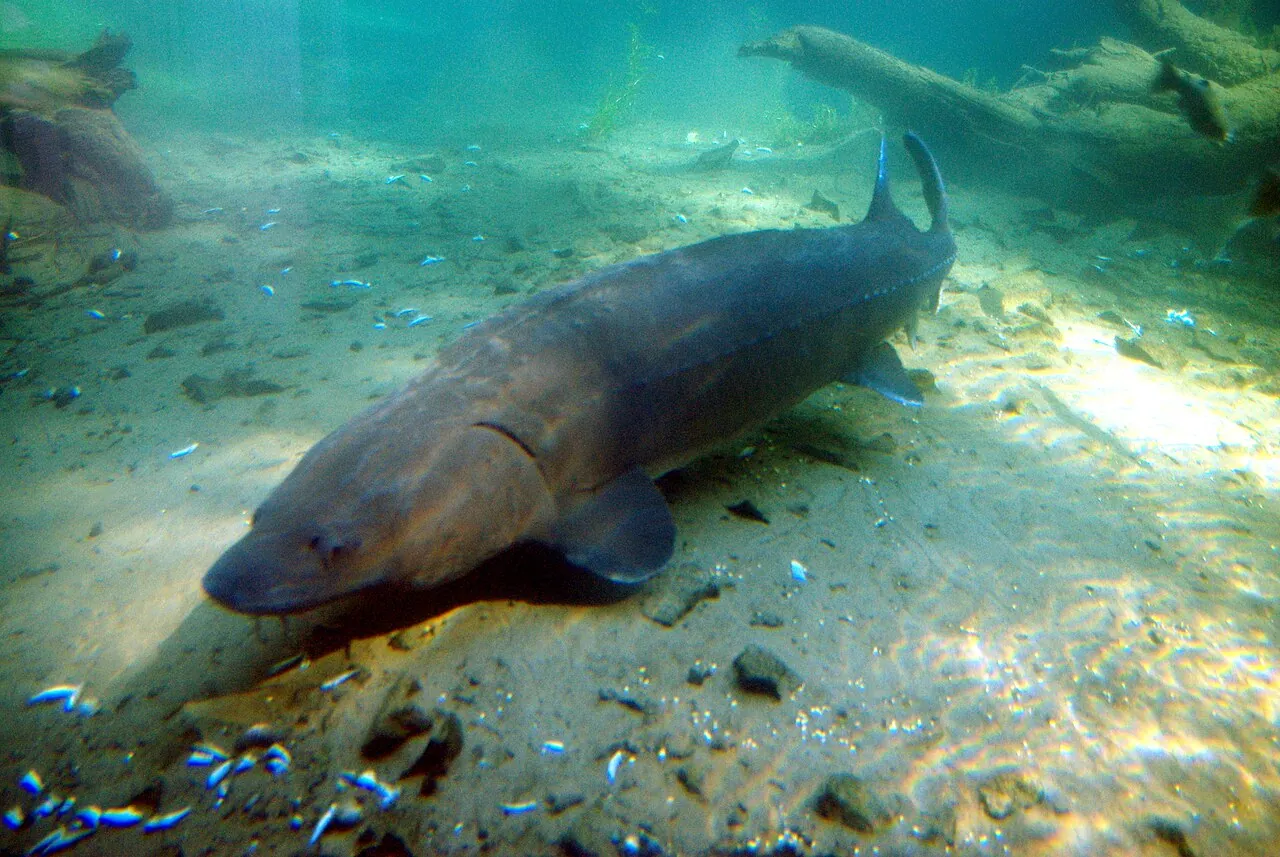
Bacterial and fungal diseases are the main health threat in intensive sturgeon farming. Almost all of it happens indoors, in recirculating aquaculture systems (RAS), and the cast of characters is short: motile aeromonads (Aeromonas hydrophila and relatives), Aeromonas salmonicida, Pseudomonas, columnaris-type gill and skin rot, and the water mould Saprolegnia that fuzzes over wounds and eggs. None of them is exotic. They are already in the system, and they turn into a disease the moment the water, the oxygen or the temperature slips and the fish weakens.
That is the whole article. Sturgeon are long-lived, slow-growing and valuable, and most are raised in dense RAS where the same water passes the fish again and again. So the pathogen load never leaves — it just waits. We get asked about sturgeon disease most often in two situations: during the cold “artificial wintering” period, when the system is run cold on purpose, and a few days after grading or transport. Both point to the same fix, and it is not a bottle of antibiotic.
What you are actually dealing with
Sturgeon disease is rarely one bug. In a sick tank you usually find a mix, and the pattern depends on temperature, the wound history of the fish, and how clean the water is.
- Aeromonas (motile aeromonads). Aeromonas hydrophila and its relatives are the most frequently reported bacteria in cultured sturgeon. They are Gram-negative, ubiquitous in fresh water, and opportunistic — a normal part of the system that turns pathogenic when fish are stressed. They cause a haemorrhagic, ulcerative septicemia.
- Aeromonas salmonicida. The agent of furunculosis. Atypical A. salmonicida strains cause real outbreaks in juvenile Siberian sturgeon (Acipenser baerii), with skin ulcers and internal lesions, and it behaves more like a primary pathogen than the motile aeromonads do.
- Pseudomonas (pseudomonosis). A classic cold-water problem in RAS. Outbreaks cluster in the “artificial wintering” period — in one RAS study, illness during the cold spell ran about 75% higher than during the optimum-temperature period. Cold water plus a heavy recirculating load is the trigger.
- Columnaris (Flavobacterium columnare). Gill and skin rot — frayed, eroding gill filaments and pale, ragged skin lesions. It rides in on warm water, high organic load and crowding.
- Saprolegnia (water mould / “fungus”). Not a true fungus but a fungus-like oomycete. It shows up as cotton-wool tufts on the skin and, critically, on the eggs in a hatchery. It is a secondary invader: it colonises tissue that is already dead or damaged — a netting wound, a columnaris lesion, an unfertilised egg — and it thrives in cold water.
Symptoms: how to recognise them
The signs overlap, which is why you treat the tank, not the textbook label, until the lab confirms which bug leads:
- Skin ulcers and red haemorrhages — open sores on the belly, flanks and around the vent, with reddening at the base of the fins and along the bony scutes. The classic bacterial picture (Aeromonas, A. salmonicida, Pseudomonas).
- Frayed, eroding gills and pale skin patches — the columnaris look; gills that can’t take up oxygen.
- Cotton-wool growths — greyish-white, fuzzy tufts on skin, fin margins or healing wounds, and a white fuzz spreading over eggs in the incubator. That is Saprolegnia.
- Bloating, fluid in the belly, pop-eye — advanced septicemia; the abdomen swells with bloody fluid.
- Reduced appetite and sluggish swimming — sick sturgeon go off feed and hang listless near the bottom. This is often the first thing seen.
- Internal signs on a cut-open fish — lesions in the kidney, spleen, liver and gonads, a congested intestine, and in heavy Aeromonas cases a heart with a dark, “mulberry-like” appearance.
Juveniles and freshly handled fish go down first. In a hatchery, a Saprolegnia bloom across a tray of eggs can take 7–22% of the batch if it is not controlled.
Diagnosis: confirm the lead pathogen
You can suspect the group from the lesions — ulcers and bleeding say bacteria, cotton wool says Saprolegnia — but you confirm the bug in the lab, because the treatment depends on it:
- Bacterial culture. Streak from the kidney, liver or an ulcer onto agar. Motile aeromonads, A. salmonicida and Pseudomonas are identified biochemically; A. salmonicida is slower-growing and needs the lab to be told to look for it.
- Antibiotic susceptibility test (antibiogram). Not optional if you plan to medicate. Aeromonas and Pseudomonas resistance is widespread and farm-specific — culture, test, and treat to the result, never blind.
- Wet mount for Saprolegnia. A scrape of the cotton-wool growth under the microscope shows the branching, non-septate hyphae of the water mould. On eggs it is visible by eye as the white fuzz spreads from dead eggs to live ones.
Why it flares up: water, temperature and wounds
Here is the part that decides everything. These are opportunistic diseases, so an outbreak is a sign the RAS tipped in the pathogen’s favour. The triggers are consistent and all manageable:
- Poor water quality — ammonia and nitrite breakthrough when the biofilter can’t keep up, accumulated organic waste. This stresses the fish and feeds the bacterial load at the same time.
- High organic load — uneaten feed, faeces and fines are food and substrate for Aeromonas, Pseudomonas and Saprolegnia. A heavily loaded RAS carries a far higher pathogen load per litre.
- Low dissolved oxygen — sturgeon are oxygen-hungry, and a DO sag immune-suppresses the fish and damages the gills the bacteria then exploit.
- Cold water and temperature swings — Pseudomonas and Saprolegnia are cold-water problems; the “artificial wintering” period is exactly when they flare. A sudden temperature change is also a direct stressor.
- Wounds from handling and crowding — grading, netting, transport and high stocking density create the skin abrasions that Aeromonas salmonicida and Saprolegnia invade through. Sturgeon disease very often follows a handling event by a few days.
So you can pour antibiotics into a dirty, cold, overloaded RAS and the disease comes straight back — now with a more resistant strain. The durable fix is the system. This is where the equipment stops being optional:
- You can’t manage what you can’t measure. A multi-parameter water quality meter reads the ammonia, dissolved oxygen, temperature and pH behind the outbreak — start here, because in a sick RAS the water chemistry is the diagnosis.
- Outbreaks track low oxygen. Sturgeon push a heavy biological load, so a dissolved oxygen cone that injects pure oxygen keeps DO high enough to hold the fish strong even at full stocking.
- Organic load is the pathogen’s food. An automatic rotary drum filter strips the suspended solids — uneaten feed and faeces — before they feed a bloom, and a properly sized biological filter keeps ammonia and nitrite from breaking through and stressing the fish.
- A UV pass: a UV steriliser on the recirculating loop knocks down free bacteria and Saprolegnia zoospores moving through the water column, lowering the infection pressure on the whole tank.
- Build a microbial community that competes with the pathogens using aquaculture probiotics. A more stable RAS is a poorer home for an opportunist.
- All of this lives or dies on the design of the recirculating aquaculture system itself — the filtration, oxygenation and flow that decide whether the load stays ahead of the fish or behind them.
Treatment: target the bug, then fix the system
When fish are ulcerating or eggs are fuzzing over, you treat directly — but treatment buys time to fix the water, it does not replace it.
- Bacterial disease — antibiotics by antibiogram. Where licensed and prescribed, in-feed florfenicol or oxytetracycline are the usual choices for sturgeon aeromonosis and pseudomonosis, dosed and withdrawn to the label. The hard rule: culture and test first. Aeromonas and Pseudomonas are frequently resistant, and sick sturgeon that have stopped feeding take in-feed medication poorly — another reason to catch it early.
- Saprolegnia — external treatment and clean water. Historically formalin and malachite green were the standard against all stages of Saprolegnia; malachite green is banned for food fish in most countries, so check your regulations. A salt bath is the safe, residue-free first line on skin infections. In the hatchery, formalin flushes on the eggs, boric acid as a prophylactic on the trays, and — above all — removing dead eggs daily so the mould has nothing to spread from.
- Improve the environment immediately. Raise dissolved oxygen, do a partial water change to dilute the load, stop or cut feeding, and lower density if you can. In a Pseudomonas cold-snap outbreak, easing the system back toward the optimum temperature often slows it faster than the drug.
Two rules from experience. First, never reach for antibiotics without an antibiogram — you will either waste them on a resistant strain or push the farm further down the resistance road. Second, the moment fish are stable, re-test the water and fix the cause — in a closed RAS the pathogen never left, and it will be back the next time the system tips over.
Prevention beats treatment
The sturgeon farms that don’t fight these diseases season after season do the same unglamorous things:
- Keep stocking density sane for the oxygenation and biofiltration the RAS actually has.
- Don’t overfeed; keep solids and dead organics out so the pathogen load stays low.
- Hold dissolved oxygen high and stable, and don’t let the biofilter fall behind on ammonia.
- Manage the cold “wintering” period carefully — it is the high-risk window for Pseudomonas and Saprolegnia.
- Minimise and time handling; treat every netting wound as an infection door for A. salmonicida and Saprolegnia.
- In the hatchery, remove dead eggs daily and keep flow and hygiene tight.
- Test the water on a schedule, not just when fish are already dying.
Sturgeon disease is, in the end, a report card on your RAS and your handling. Read it that way and you treat the system and the routine — not just the fish.
For a wider view, see our companion guides on sturgeon nutritional and husbandry diseases and the common management mistakes in sturgeon RAS farming. If you’re moving toward a system that controls water quality by design, our biofloc and RAS water management guide covers the bacterial approach.
Frequently asked questions
What are the main bacterial diseases in sturgeon?
The most common are motile aeromonad septicemia (Aeromonas hydrophila and relatives), furunculosis from Aeromonas salmonicida, pseudomonosis (Pseudomonas), and columnaris (gill and skin rot). They are opportunistic bacteria already present in the RAS that cause disease when fish are stressed by poor water, low oxygen, cold temperature or handling wounds.
What is Saprolegnia in sturgeon?
Saprolegnia is a fungus-like water mould that appears as cotton-wool tufts on the skin, wounds and, especially, on eggs in the hatchery. It is a secondary invader of already-damaged or dead tissue and thrives in cold water. On a tray of eggs it can take 7–22% of the batch if dead eggs are not removed and water quality is not controlled.
Why do sturgeon get sick in RAS?
Because the same water recirculates, the pathogen load never leaves the system. Outbreaks are triggered by ammonia or nitrite breakthrough, low dissolved oxygen, high organic load, the cold "artificial wintering" period, and wounds from grading and handling. Pseudomonosis in particular spikes during the cold spell — roughly 75% higher than at optimum temperature in one RAS study.
How do you treat bacterial and fungal disease in sturgeon?
For bacterial disease, use an antibiotic chosen by a susceptibility test (florfenicol or oxytetracycline where licensed) while immediately improving the water. For Saprolegnia, use a salt bath or formalin, remove dead eggs daily in the hatchery, and fix the cold, dirty water that let it start. Never dose antibiotics blindly — Aeromonas and Pseudomonas are often resistant.
How do you prevent sturgeon disease?
Hold dissolved oxygen high and keep the biofilter ahead of ammonia, keep density sane, manage the cold wintering window, minimise and time handling so fish aren't wounded, remove dead eggs daily in the hatchery, and test the water on a schedule. Antibiotics alone won't keep these opportunists away.
Put this into practice on your farm
Tell our engineers your species, target density and site — we will size the system and reply within one business day.
More to explore
- What Is Biofloc Technology and How Does It Work?
- Fish Feed Types: Floating vs Sinking Pellets for Aquaculture
- Trichodina in Tilapia: Symptoms, Diagnosis & Control
- White Spot Disease in Shrimp (WSSV): Prevention & Biosecurity
- Columnaris and Parasitic Diseases in Catfish
- Water Quality & Fish Disease: Why Most Outbreaks Start in the Water
Building a system from what you read here? Ask our engineers for a tailored plan →