
Enteric Septicemia of Catfish (ESC): Symptoms & Control
Edwardsiella ictaluri is the number-one bacterial killer of farmed catfish — hole-in-the-head, septicemia, mass die-offs. Spot it, treat it, fix the water.
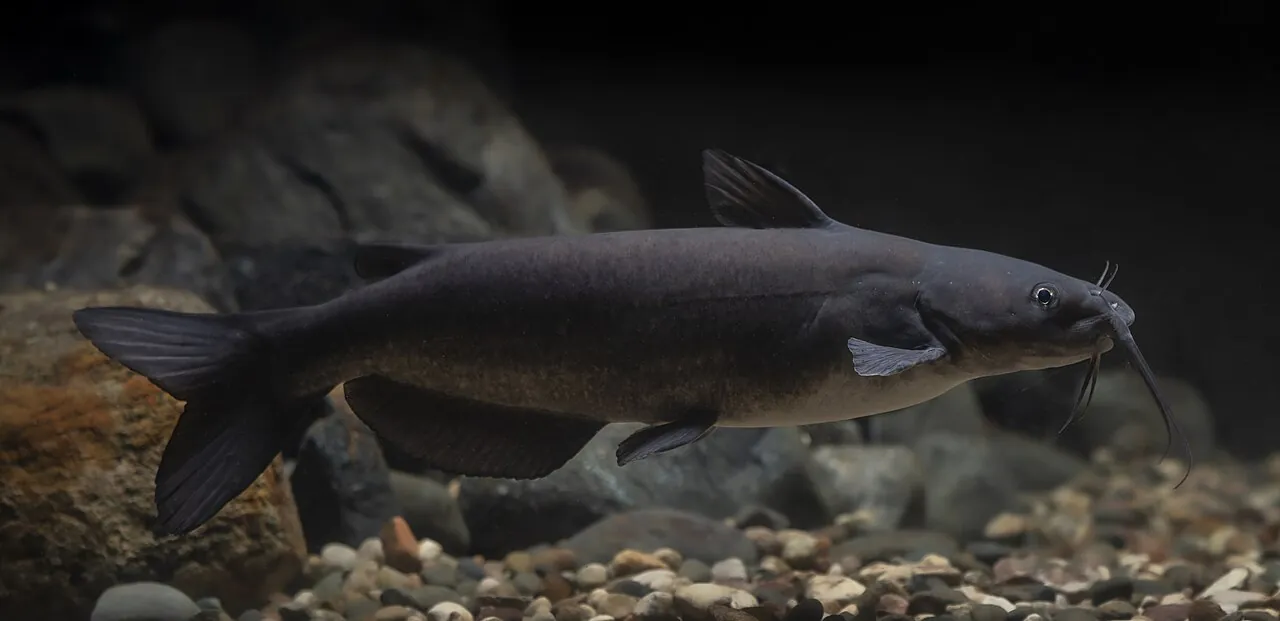
Enteric septicemia of catfish (ESC) is the single most damaging bacterial disease in catfish farming. The pathogen is Edwardsiella ictaluri, a Gram-negative bacterium that lives inside the fish’s own cells and turns a healthy pond into a graveyard fast — outbreaks routinely run high mortality, and in striped catfish (Pangasius) a bad one can take close to the whole crop. It hits channel catfish in the United States, Pangasius/tra catfish in Vietnam, and African catfish (Clarias) wherever they are raised intensively. Different fish, same bug, same story.
If you farm catfish, you will meet ESC. We get asked about it constantly by customers raising lele and patin in Indonesia, cá tra in the Mekong Delta, and Clarias across West Africa — and it almost always shows up on the same kind of farm at the same kind of time: warm water in the low-to-mid twenties, a dirty, overloaded pond, and fish already stressed by crowding or handling. That last detail is the whole article, and we will come back to it.
What ESC actually is
Edwardsiella ictaluri is a Gram-negative, facultative intracellular bacterium. “Intracellular” matters: it hides inside the fish’s own immune cells, which is part of why it is so hard to shake and why a vaccine works better than chasing it with antibiotics. It enters mainly two ways — through the gut after the fish eats contaminated material, and through the nose (the olfactory pit), from where it travels up the nerve into the brain. That brain route is what produces the disease’s famous sign.
It is contagious and waterborne. Sick and carrier fish shed the bacteria; it passes fish-to-fish through the water and through the mud on the pond bottom, where it can survive between outbreaks waiting for the temperature to come back up. One untreated carrier batch can seed a whole farm.
Two faces of the disease
ESC shows up in two forms, and which one you see depends partly on the species and the route of infection.
- The acute, gut form (septicemia). The fast killer. Fish go off feed, then you find them at the surface swimming in a slow spiral with sudden erratic bursts, or hanging head-up, tail-down. Externally: hemorrhage — red patches — around the mouth, under the belly and along the flanks, reddened fin bases, pale gills, swollen “pop-eye” (exophthalmia), and small skin ulcers. Cut one open and the viscera, the lining of the belly and the muscle are dotted with pinpoint bleeds (petechiae); the liver is mottled red and pale.
- The chronic, brain form (“hole-in-the-head”). When the bacteria climb the olfactory nerve into the brain, the inflammation eats through the skull at the soft spot on top of the head, leaving an open ulcer or literal hole between the eyes. This is the sign that names the disease — “hole-in-the-head” — and it is the chronic, slower picture.
In Pangasius (striped/tra catfish) the disease is usually called bacillary necrosis of Pangasius (BNP), and the giveaway is internal: scatter the open fish and you find multiple small white spots on the liver, kidney and spleen, with a swollen abdomen. Same bacterium, different headline sign.
Symptoms: how to recognise it
Pull the signs together and this is what you are looking for:
- Off feed, then spiral/erratic swimming at the surface — usually the first thing a farmer notices.
- Hemorrhage around the mouth, belly and fin bases; small skin ulcers — the red, bleeding septicemic look.
- Pop-eye (exophthalmia), pale gills, swollen belly with fluid — advanced septicemia.
- The “hole-in-the-head” ulcer — an open lesion or hole on top of the head between the eyes; the chronic sign.
- White spots on the liver, kidney and spleen (the BNP picture in Pangasius) — found when you open a fish.
- Mass mortality — once it gets going in warm, dirty water, the die-off climbs fast.
Fingerlings and juveniles go down hardest and fastest. In a nursery a late catch can cost whole tanks.
Diagnosis: confirm the bug
The hole-in-the-head ulcer and the white-spotted organs are strong clues, but several catfish problems overlap, and the treatment hangs on getting it right — so confirm in the lab:
- Bacterial culture. Streak from the brain, the head-kidney, the liver or an ulcer onto agar. E. ictaluri is slow-growing — tell the lab to wait for it and to incubate at the right (cooler) temperature, or it gets overgrown.
- PCR. A PCR test confirms E. ictaluri specifically and quickly, which is useful because the bug is fussy to culture.
- Antibiotic susceptibility test (antibiogram). Not optional if you plan to medicate — florfenicol-resistance plasmids have been documented in E. ictaluri, so culture, test, and treat to the result rather than blind.
Why it flares up: the water and the temperature
Here is the part the “which antibiotic” articles skip. ESC is opportunistic and temperature-driven, so an outbreak is a sign the pond has tipped in the bacteria’s favour. The triggers are consistent:
- Water temperature in the danger window — ESC is a warm-but-not-hot disease. It flares at roughly 22–28°C (the broad range is 20–30°C). Spring and autumn — the seasons when ponds sit right in that band — are the classic ESC windows. This is the trigger most farmers underestimate.
- Poor water quality — high ammonia and nitrite, low pH swings, accumulated waste. This stresses the fish and feeds the bacterial load at the same time.
- High organic load — uneaten feed, faeces and dead algae are food and substrate for the bacteria, and the mud bottom is where E. ictaluri survives between outbreaks. A dirty pond carries a far higher pathogen load.
- Overcrowding and low dissolved oxygen — high density means more fish-to-fish contact and more waste per litre; an oxygen sag immune-suppresses the fish and damages the gills the bacteria exploit.
- Handling and transport stress — grading, netting and moving fish suppresses immunity and opens skin wounds; ESC very often follows a handling event by a few days.
So you can pour antibiotics into a warm, dirty, crowded pond and the disease comes straight back — now with a more resistant strain. The durable fix is the environment. This is where the equipment stops being optional:
- You can’t manage what you can’t measure. A multi-parameter water quality meter reads the temperature, ammonia, dissolved oxygen and pH behind the outbreak — start here, because in a sick pond the water is the diagnosis, and temperature is the first number to read for ESC.
- Organic load is the bacteria’s food and home. An automatic rotary drum filter strips the suspended solids — uneaten feed and faeces — before they feed a bloom, and a properly sized biological filter keeps ammonia and nitrite from breaking through and stressing the fish.
- Outbreaks track low oxygen. Reliable aeration — a roots blower feeding the pond, or a dissolved oxygen cone where you need to push DO hard in intensive systems — keeps the fish strong and the gills healthy.
- A UV pass: a UV steriliser on a recirculating loop knocks down free-swimming E. ictaluri moving through the water column, lowering the infection pressure on the whole batch.
- Build a microbial community that competes with the pathogen using aquaculture probiotics — a cleaner, more stable pond is a poorer home for an opportunist, and probiotics have been shown to help catfish resist E. ictaluri.
Treatment: target the bug, then fix the cause
When fish are dying, you treat directly — but treatment buys time to fix the water, it does not replace it.
- In-feed antibiotics, by antibiogram. Where licensed and prescribed, florfenicol (e.g. the Aquaflor premix) and sulfadimethoxine/ormetoprim are the standard medicated-feed choices for ESC, dosed and withdrawn to the label. The hard rule: culture and test first — florfenicol resistance is documented in E. ictaluri. And there is a catch with the route: ESC fish go off feed early, so medicated feed only reaches the fish that are still eating. Catch it early, while the pond is still feeding, or the drug never gets in.
- Vaccination — the real answer. Because the bug hides inside cells and goes off-feed fast, prevention beats cure here more than for most diseases. A live attenuated ESC vaccine (delivered orally or by immersion to fingerlings) is available and gives durable protection in channel catfish, and vaccines for Pangasius BNP are in development. If you have recurring ESC, vaccinating fingerlings is usually a better investment than another season of antibiotics.
- Stop feeding and fix the environment immediately. Cutting or stopping feed during an outbreak slows the gut route and reduces waste; raise dissolved oxygen, do a partial water change to dilute the load, and lower density if you can. Because ESC is temperature-driven, an outbreak in the spring/autumn window often eases as the water moves out of the 22–28°C band.
Two rules from experience. First, never reach for antibiotics without an antibiogram — you will either waste them on a resistant strain or push the farm further down the resistance road, and on a fish that has already stopped eating the medicated feed barely reaches it anyway. Second, the moment fish are stable, re-test the water and fix the cause — drop the load, ease the density, watch the temperature — or the next time the pond sits at 25°C it comes back the same.
For a wider view of how water and temperature drive bacterial outbreaks across the farm, see our companion guides on columnaris and parasites in catfish and the common management mistakes in catfish farming. If you’re moving toward a system that controls water quality by design, our biofloc water management guide covers the bacterial approach.
Prevention beats treatment
The catfish farms that don’t fight ESC season after season do the same unglamorous things:
- Vaccinate fingerlings where an ESC vaccine is available — it is the most reliable protection.
- Watch the thermometer through the spring and autumn risk windows, and don’t grade or move fish into them.
- Keep stocking density sane for the aeration and filtration you actually have.
- Don’t overfeed; keep solids and dead organics out so the pathogen load and the mud reservoir stay low.
- Hold dissolved oxygen above ~5 mg/L and keep ammonia in check.
- Quarantine and screen new fingerlings before they go in the main pond — a carrier batch seeds the farm.
- Test the water on a schedule, not just when fish are already dying.
ESC is, in the end, a report card on your water, your temperature management and your handling. Read it that way and you treat the pond and the routine — not just the fish.
Frequently asked questions
What is enteric septicemia of catfish (ESC)?
ESC is a bacterial disease of farmed catfish caused by Edwardsiella ictaluri, a Gram-negative bacterium that lives inside the fish's cells. It causes a haemorrhagic septicemia and, when it reaches the brain, the classic "hole-in-the-head" ulcer. In Pangasius (striped/tra catfish) the same bug causes bacillary necrosis of Pangasius (BNP), with white spots on the liver, kidney and spleen. It is the most damaging bacterial disease in catfish farming.
What are the symptoms of ESC in catfish?
Loss of appetite, then slow spiral or erratic swimming at the surface; hemorrhage around the mouth, belly and fin bases; pale gills; pop-eye; small skin ulcers; an open "hole-in-the-head" lesion in the chronic form; and white spots on the liver, kidney and spleen in Pangasius. Mortality climbs fast in warm, dirty water.
At what temperature does ESC break out?
ESC is a warm-but-not-hot disease, flaring at roughly 22–28°C (broad range 20–30°C). Spring and autumn, when pond water sits in that band, are the classic outbreak windows. It eases as the water moves out of that range.
How do you treat ESC in catfish?
With in-feed antibiotics chosen by a susceptibility test — florfenicol or sulfadimethoxine/ormetoprim where licensed — while immediately improving the water and stopping or cutting feed. Catch it early: ESC fish go off feed fast, so medicated feed only reaches fish still eating. Never dose blindly — florfenicol resistance is documented. A live attenuated ESC vaccine for fingerlings is the more reliable long-term answer.
How do you prevent ESC?
Vaccinate fingerlings where a vaccine is available, watch the temperature through the spring/autumn risk windows, keep density sane, don't overfeed, hold dissolved oxygen high, quarantine new stock, and test the water on a schedule. Antibiotics alone won't keep this opportunist away.
Put this into practice on your farm
Tell our engineers your species, target density and site — we will size the system and reply within one business day.
More to explore
- What Is Biofloc Technology and How Does It Work?
- Fish Feed Types: Floating vs Sinking Pellets for Aquaculture
- Trichodina in Tilapia: Symptoms, Diagnosis & Control
- White Spot Disease in Shrimp (WSSV): Prevention & Biosecurity
- Bacterial & Fungal Diseases in Sturgeon: Symptoms & Control
- Water Quality & Fish Disease: Why Most Outbreaks Start in the Water
Building a system from what you read here? Ask our engineers for a tailored plan →