Sturgeon RAS Farming: Common Mistakes & Disease Prevention
Nearly every sturgeon disease in a RAS starts as a management mistake. A guide to the diseases, the water-quality errors behind them, and how to fix them.
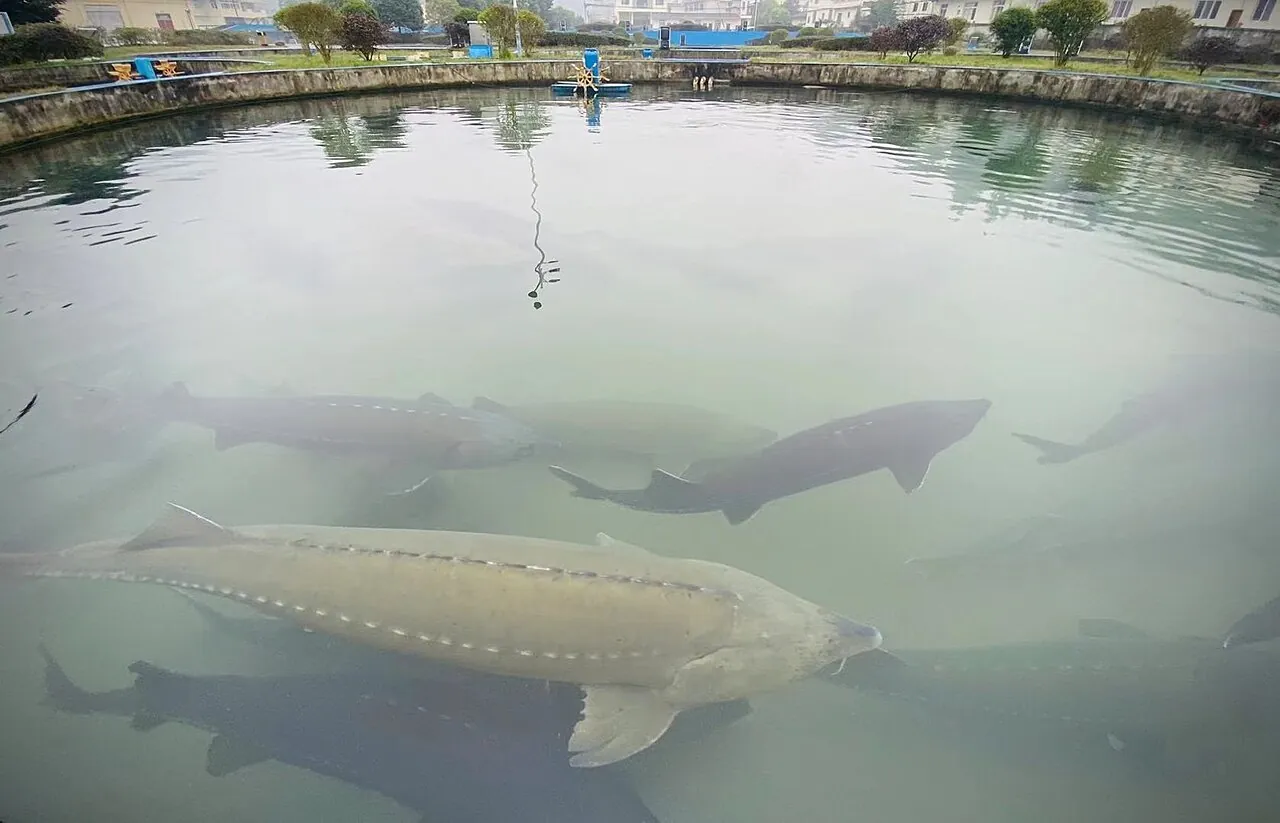
Sturgeon are tough, slow-growing fish that pull a premium price for both meat and caviar — which is exactly why most of them are now raised indoors, in recirculating aquaculture systems (RAS). A RAS gives you control: stable temperature, year-round growth, tight biosecurity, and a footprint a fraction of a pond farm’s. But that control cuts both ways. In a recirculating loop the fish, the water, the bacteria and the waste are all sealed in the same few hundred cubic metres, so when something in the management slips, it slips for the whole system at once.
We supply RAS equipment to sturgeon farms — and the single most common message we get is some version of “the fish were fine on Monday and dying on Thursday.” Almost every time, the post-mortem leads back not to an exotic pathogen but to a water-quality mistake: a biofilter that wasn’t mature, oxygen left to chance, CO₂ that was never stripped out, solids that piled up. This guide walks through the diseases you will actually meet in a sturgeon RAS, then — the part that saves fish — the management mistakes that let them in, and the equipment fix for each.
If you remember one sentence, make it this: in a RAS, you are not farming sturgeon, you are farming water — and healthy water grows healthy fish.
Part A — Sturgeon diseases in a RAS, at a glance
Sturgeon are ancient, hardy fish, but under RAS intensity the same handful of problems come up again and again. They are mostly opportunistic — already present in the loop, waiting for a stress to let them take hold.
Bacterial diseases
Motile Aeromonas septicaemia (Aeromonas hydrophila) — the workhorse bacterial killer in freshwater RAS. Aeromonas lives in every system and turns deadly when fish are stressed by poor water. The picture is haemorrhagic: red patches at the fin bases and on the belly, skin ulcers, swollen vent, fluid in the abdomen, sluggish fish hanging near the bottom. It is the textbook “dirty water plus stressed fish” disease — a direct readout of your water quality. → Full guide: sturgeon bacterial and fungal diseases.
Lactococcosis / streptococcosis (Lactococcus garvieae, Streptococcus spp.) — increasingly reported in warm-water sturgeon RAS. Affected fish darken, lose balance, swim erratically or spiral, and may show bulging eyes. It flares when temperature and organic load climb together, and it spreads fast in a closed loop. → Full guide: sturgeon bacterial and fungal diseases.
Columnaris (Flavobacterium columnare) — a bacterium that eats away at skin and gills, leaving greyish-white or yellowish patches, frayed barbels and fins, and pale, rotting gills. It moves quickly in warm, crowded water and is often mistaken for fungus.
Fungal disease
Saprolegnia (water mould) — the cottony grey-white fuzz on skin, fins and especially eggs. Saprolegnia hits sturgeon hard: reported losses run 7–22 % in an outbreak, and it is driven by low water temperature and by the fungal cysts that survive and recirculate in the system. Critically, Saprolegnia almost never attacks an undamaged fish — it settles on wounds, on fish weakened by handling, or on stock chilled by a temperature swing. If you are seeing it, the real question is what injured or stressed the fish first.
Environmental (non-infectious) disorders
Gas bubble disease — not a pathogen at all, but one of the most sturgeon-specific dangers in a RAS. When the water becomes supersaturated with gas — nitrogen from a leaking pump suction, or oxygen over-injected without degassing — gas comes out of solution inside the fish, forming bubbles in the blood, gills, fins and behind the eyes. Sturgeon are notably sensitive: studies on river sturgeon show total dissolved gas (TDG) supersaturation alone is lethal, and worse when suspended solids are present. It looks like a disease but is pure equipment-and-plumbing failure.
Low-oxygen stress and asphyxiation — oxygen is the first thing that kills fish in an intensive system, and sturgeon are big, active, oxygen-hungry fish. When DO drops, fish crowd the inlet, gasp, stop feeding, and become wide open to every bacterium above. A blower trip or a power cut at night can empty a tank before morning.
Nutritional and husbandry disorders — skeletal and barbel deformities, poor growth and fatty-liver problems show up when diet, density or water chemistry are off. These build slowly and are easy to miss until they cost you a grading. → Full guide: sturgeon nutritional and husbandry diseases.
Notice the pattern: nearly every item on this list is triggered by water quality, temperature or oxygen — that is, by management. Part B is where the fish are actually saved.
Part B — The management mistakes that cause sturgeon disease in a RAS
Here is the uncomfortable truth from years of commissioning systems: in the great majority of RAS outbreaks, the pathogen didn’t start the problem — the operator’s setup or routine did. Below are the mistakes we see most often, what each does to the fish, the correct practice, and the equipment that closes the gap.
Mistake 1 — Stocking fish before the biofilter is mature
The most common — and most expensive — beginner mistake. A new RAS biofilter has no established colony of nitrifying bacteria, so the moment you feed a full stock of fish, ammonia spikes, then nitrite, and the fish are poisoned in their own water before the filter ever catches up. A biofilter takes weeks to mature; stocking on day one skips the most important step.
Do this instead: cycle the system and grow the bacterial colony before the fish go in. Seed the filter, dose ammonia, and wait until it reliably converts ammonia → nitrite → nitrate, verified by testing — not by the calendar.
Equipment: a properly sized biological filter is the living heart of the RAS; dosing aquaculture probiotics helps establish and stabilise the nitrifying and heterotrophic community faster.
Mistake 2 — Leaving oxygen to chance, with no pure-oxygen backup
Sturgeon are large, active fish with a high oxygen demand, and a stocked RAS loads far more biomass per litre than aeration alone can support. Relying on a blower and atmospheric air to hold DO is the classic way to wake up to a dead tank — because at peak feeding and at night, demand outruns what air can dissolve.
Do this instead: hold dissolved oxygen comfortably above the fish’s demand, and build in pure-oxygen capacity for the peaks, not just air. Always have oxygen backup on an independent power source — a night-time DO crash is the single most common cause of mass loss.
Equipment: a dissolved oxygen cone injects pure oxygen and dissolves it efficiently under pressure, pushing DO to the high levels intensive sturgeon need; a root blower supplies the baseline aeration and degassing airflow.
Mistake 3 — Never degassing: letting CO₂ and gas supersaturation build
This is the quiet RAS killer. Fish and biofilter bacteria pump out carbon dioxide constantly, and in a closed loop it accumulates, drops the pH, and stresses the fish long before you’d suspect it. The flip side is supersaturation — over-inject oxygen or pull air in through a leaking pump and you cause gas bubble disease. A RAS needs to actively strip gas out, not just add oxygen in.
Do this instead: run a dedicated degassing stage that vents CO₂ and excess nitrogen and brings total dissolved gas back toward equilibrium. Don’t confuse adding oxygen with removing CO₂ — they are two separate jobs.
Equipment: a root blower driving a degassing column or trickling stage strips CO₂ and surplus gas out of the loop; pair it with the dissolved oxygen cone so you oxygenate and degas as two controlled steps rather than one uncontrolled one.
Mistake 4 — Letting ammonia and nitrite run out of control
Even with a mature filter, ammonia and nitrite can climb if you overfeed, overstock, or overload the biofilter past its capacity. Sturgeon are sensitive to nitrite in particular, which blocks the blood’s oxygen-carrying ability — “brown-blood disease” — compounding any oxygen problem you already have. By the time fish show it, the water has been wrong for days.
Do this instead: match feed load to biofilter capacity, and track ammonia and nitrite on a schedule so you see the trend before it becomes a crisis. Treat a nitrite climb as an emergency, not a number to note.
Equipment: a multi-parameter water quality tester reads ammonia, nitrite, pH, temperature and DO — the parameters behind almost every disease on this page — in one device. In a RAS it is not optional; it is how you see what the fish are breathing.
Mistake 5 — Not removing solids fast enough
Uneaten feed and faeces are the raw material for every other problem: they feed the bacteria that spike ammonia, they consume oxygen as they break down, and they clog the biofilter and irritate sturgeon gills. In a recirculating loop, solids that aren’t removed mechanically just circulate and rot. Settling alone can’t keep up with an intensive stock.
Do this instead: remove suspended solids continuously and mechanically, as the first treatment step before water reaches the biofilter — so the biofilter only has to handle dissolved waste.
Equipment: an automatic rotary drum filter is the standard solids-removal stage in a modern RAS — it screens out faeces and uneaten feed continuously and self-cleans, cutting the organic load that drives bacterial disease before it can build.
Mistake 6 — Unstable temperature
One of the advantages of a RAS is temperature control — and one of the most common mistakes is wasting it. Temperature swings stress sturgeon and shift the whole disease picture: a drop toward cold opens the door to Saprolegnia (which thrives in low temperature), while a climb into warm water is when Lactococcus and Columnaris flare. Sudden swings are worse than a steady non-ideal temperature.
Do this instead: hold the temperature stable in the band that suits your species and life stage, and avoid abrupt changes — especially the cold drops that invite water mould. Use the control a RAS gives you instead of letting ambient conditions run the tank.
Mistake 7 — Stocking too densely for the life support you have
A RAS tempts you to push density, because the fish look fine — until a single stressor hits and the whole overstocked tank goes down at once. Crowding multiplies waste per litre, competition for oxygen, fish-to-fish disease transmission, and physical injuries that Saprolegnia and Aeromonas exploit. The density a tank can carry is set by its weakest life-support component, not by the volume.
Do this instead: match stocking density to your real oxygen, filtration and solids-removal capacity — not to the harvest you’re hoping for. If you want to stock heavier, upgrade the life support first, then add fish.
Mistake 8 — Not monitoring water quality continuously
“The fish look fine” is not a measurement, and in a RAS the margin for error is small: with no pond buffer, a parameter can go lethal in hours. Farmers who only test after fish start dying are always behind the curve, because in a closed loop the water tips fast.
Do this instead: monitor the key parameters continuously, not just with a daily spot check — DO and temperature especially, because they move fastest and kill quickest. Set alarms on the parameters that crash a tank overnight.
Equipment: a multi-parameter water quality tester tracks the values that drive disease, and pairing it with a UV steriliser on the loop knocks down free-swimming bacteria, fungal spores and parasites circulating in the water — the front line that keeps a closed system clean.
Mistake 9 — Weak biosecurity on stock and source water
This is how a clean RAS gets infected: in a batch of fingerlings nobody screened, or in untreated make-up water pumped from a shared source. One unquarantined introduction can seed an outbreak through the entire closed loop, and because everything recirculates, it reaches every fish.
Do this instead: quarantine and observe every new batch in a separate system before they meet your main stock, source fingerlings only from hatcheries you trust, and treat all incoming make-up water rather than trusting it.
Equipment: a UV steriliser on the make-up line and the recirculating loop disinfects free-swimming pathogens before they reach the fish — the core biosecurity tool of a RAS.
The thread that ties it all together
Read Part A and Part B side by side and the lesson is hard to miss. Almost every sturgeon disease in a RAS is opportunistic: the pathogen is already in the loop, waiting for management to hand it an opening. An immature biofilter, oxygen left to chance, CO₂ never stripped, solids left to rot, temperature allowed to swing — these aren’t separate from disease. They are the disease, one step upstream.
That is also the good news. A RAS gives you more control than almost any other system — if you use it. Mature the filter before you stock, hold oxygen with pure-O₂ backup, degas the loop, strip the solids, monitor the water, keep the temperature steady, and quarantine new fish — and most of the diseases on this page never get the opening they need.
For the deeper dives, follow the links above into each disease group. If you are weighing RAS against the pond-based alternative, our guide to biofloc vs RAS compares the two approaches; and for the hardware itself, see how a complete RAS system fits together.
Frequently asked questions
What are the most common diseases in sturgeon RAS?
The most common are bacterial — motile Aeromonas septicaemia (Aeromonas hydrophila), lactococcosis/streptococcosis (Lactococcus garvieae) and Columnaris (Flavobacterium columnare) — plus the fungus Saprolegnia (water mould) and environmental disorders such as gas bubble disease and low-oxygen stress. Most are opportunistic and triggered by water quality, temperature or oxygen rather than by bad luck.
Why do fish die suddenly in a recirculating system?
Because a RAS has no pond buffer, a single parameter can go lethal in hours. The usual causes of a sudden crash are an oxygen failure at night (a blower trip or power cut), an ammonia or nitrite spike from an immature or overloaded biofilter, or gas supersaturation causing gas bubble disease. Continuous monitoring with alarms on DO and temperature is the defence.
How do you prevent disease in a sturgeon RAS?
Mature the biofilter before stocking, hold dissolved oxygen above the fish's demand with pure-oxygen backup, degas the loop to strip CO₂ and avoid supersaturation, remove solids continuously with a drum filter, keep ammonia and nitrite in check, hold temperature stable, monitor water quality continuously, and quarantine new stock and treat incoming water. Prevention through water management is far cheaper than treatment.
What is gas bubble disease in sturgeon?
A non-infectious disorder caused by water supersaturated with gas — nitrogen drawn in through a leaking pump or oxygen over-injected without degassing. Gas comes out of solution inside the fish, forming bubbles in the blood, gills, fins and behind the eyes. Sturgeon are especially sensitive; total dissolved gas supersaturation alone can be lethal. Proper degassing and leak-free plumbing prevent it.
Do you need pure oxygen for a sturgeon RAS?
For any intensive stock, yes. Sturgeon are large, active, oxygen-hungry fish, and aeration with atmospheric air alone cannot meet peak demand in a densely stocked loop. A dissolved oxygen cone injecting pure oxygen, backed up on an independent power source, is standard practice — and the lack of it is a leading cause of mass mortality.
Put this into practice on your farm
Tell our engineers your species, target density and site — we will size the system and reply within one business day.
More to explore
- What Is Biofloc Technology and How Does It Work?
- Fish Feed Types: Floating vs Sinking Pellets for Aquaculture
- Aquaculture System Design: RAS vs Biofloc vs Pond
- Trichodina in Tilapia: Symptoms, Diagnosis & Control
- White Spot Disease in Shrimp (WSSV): Prevention & Biosecurity
- Columnaris and Parasitic Diseases in Catfish
- Water Quality & Fish Disease: Why Most Outbreaks Start in the Water
Building a system from what you read here? Ask our engineers for a tailored plan →