Nutritional & Husbandry Diseases in Sturgeon: Causes & Prevention
Most sturgeon losses in RAS aren't germs — they're fatty liver, gas bubble disease, low oxygen and deformities from feed and water errors. Here's the fix.
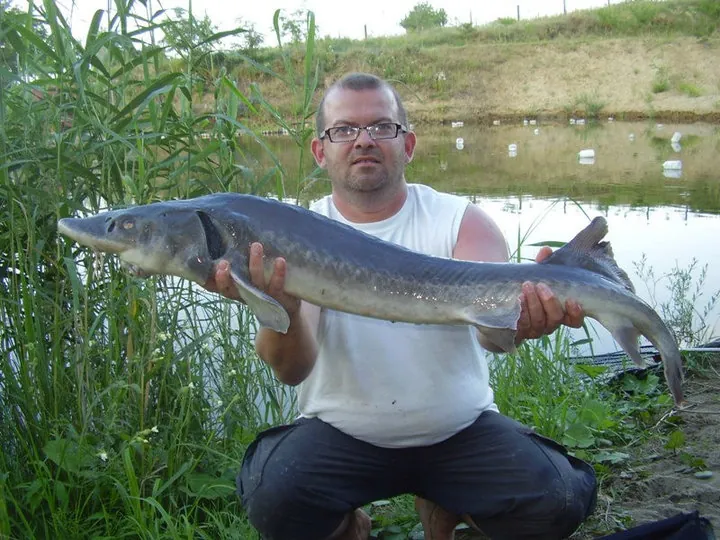
Not every dead sturgeon has a germ in it. On intensive farms — and almost every sturgeon farm today runs on a recirculating system — the fish that stop eating, swim crooked or float belly-up are usually telling you about the feed and the water, not about a bacterium. These are the non-infectious diseases: fatty liver, gas bubble disease, low oxygen, skeletal deformities, ammonia-burnt gills. You cannot vaccinate against any of them. You manage them, or you lose fish.
Sturgeon (Acipenser and related genera) make this harder than most farmed fish. They are long-lived, slow-growing and were built for cold, fast, well-oxygenated rivers — the Volga, the Danube, the Caspian feeders. Crowd them into a warm tank on a rich pellet and small mistakes compound for years before they show. We sell the equipment that keeps those mistakes from happening, so we see the same handful of husbandry failures on farm after farm. Here is what they are and how to stop them.
Fatty liver: the disease you only see at the dissection table
Fatty liver — nutritional hepatic lipidosis — is the single most common nutritional disorder in farmed sturgeon, and the cruellest, because the fish look fine until they don’t. The liver quietly fills with fat over months. Growth slows, the fish gets soft and pale, disease resistance drops, and you often only confirm it when you open a dead one and find a swollen, greasy, yellow-tan liver instead of a firm dark-red one.
The cause is almost always the feed. Two things drive it:
- Too much energy. Modern sturgeon pellets are pushed high in fat to grow fish fast. Past a point the liver can’t keep up and just stores the surplus. In juvenile Amur sturgeon, raising dietary lipid pushed the hepatosomatic index (liver weight as a share of body weight) from about 2.9% up to 6.3% — the liver literally doubling in relative size with fat. Work on Yangtze sturgeon put the safe ceiling around 14% dietary lipid; above roughly 8–14%, depending on species and temperature, you start seeing hepatocyte vacuolation and metabolic damage.
- Missing lipotropic nutrients. Even at sane fat levels, a diet short on choline, inositol, carnitine or the B-vitamins can’t move fat out of the liver. The fat goes in and doesn’t come back out.
The fix is not a medicine. It’s the feed and the feeding:
- Use a real, species-appropriate sturgeon feed formulated for sturgeon — a slow-sinking pellet with controlled fat and the lipotropic package built in — not a generic trout or carp ration pushed for maximum growth.
- Don’t overfeed. Match the ration to water temperature; sturgeon go off feed in warm water and a “normal” ration then becomes an overdose.
- Watch your fastest-growing fish, not your average. They hit fatty liver first.
Gas bubble disease: bubbles in the blood from supersaturated water
This one is pure husbandry, and sturgeon are unusually sensitive to it. Gas bubble disease (GBD) happens when the total dissolved gas (TDG) in the water climbs above 100% saturation — the water holds more gas than the atmosphere can support — and that excess gas comes out of solution inside the fish, as bubbles in the gills, fins, eyes and bloodstream. It is the fish-tank version of the diver’s bends.
In a recirculating system the gas creeps up where you’d least expect: a leaking pump sucking air on its intake, a waterfall or aggressive aeration driving nitrogen in, a deep injection of pure oxygen, cold incoming water that warms and supersaturates. In trials on river sturgeon, water at 125–140% TDG caused rapid breathing, frantic swimming, visible microbubbles in the gills and on the pectoral and dorsal fins, and a swollen belly in over 90% of the fish. Fry and fingerlings die fastest.
You beat it by measuring and degassing:
- Measure total gas pressure, not just oxygen. A multi-parameter water quality meter that reads dissolved oxygen and tracks saturation is your early warning; if DO alone reads wildly over 100% you already have a gas problem.
- Degas the water. A properly run degassing tower or stripping column — water broken over media and exposed to air — drives the excess nitrogen and oxygen back out before the water reaches the fish. Build it into the RAS loop; don’t treat it as optional.
- Find the air leak. A pump pulling air on the suction side is the classic cause and the easiest fix.
- Even pure-oxygen systems need care: when you push DO hard with a dissolved oxygen cone, run it to lift oxygen to target, not to slam the water past 100% total saturation. The cone is precise for exactly this reason — dose oxygen, don’t supersaturate.
Low oxygen: the river fish in a warm tank
Sturgeon evolved in cold, fast, oxygen-rich water and they never lost the high demand. They have less tolerance for low dissolved oxygen than tilapia or catfish, and they show it early: hanging near the inflow, gulping at the surface, going off feed. Chronic low oxygen alone won’t always kill them outright, but it stunts growth, wrecks the gills, and leaves the fish wide open to every bacterium and parasite waiting in the system.
The trap is that oxygen demand isn’t constant. It spikes right after feeding and climbs with water temperature, exactly when a loaded RAS tank is least able to supply it. Hold dissolved oxygen comfortably above the danger zone — for sturgeon, keep it well up, not just “above 5 mg/L” — across the whole daily cycle, not just on average.
- Drive the base aeration with a reliable Roots blower feeding diffusers — robust, continuous, the workhorse of any sturgeon system.
- For high-density tanks and the post-feed oxygen spike, a dissolved oxygen cone injects pure oxygen efficiently and lets you hold a high, stable DO without over-gassing (see GBD above — the same tool, used carefully, prevents both problems).
- Never run a degassing tower or aerator that strips CO₂ but starves you of oxygen at peak load. Measure, don’t guess.
Ammonia and nitrite: gill burn from a stalled biofilter
In a recirculating system the fish swim in their own waste, and the biofilter is the only thing standing between them and ammonia poisoning. Sturgeon are heavy feeders and heavy excretors. When the biofilter is undersized, freshly started, cold, or knocked back by a treatment, ammonia and nitrite climb and the gills pay first: pale, swollen, frayed lamellae that can’t take up oxygen — which loops you straight back into the low-oxygen problem above. It is non-infectious damage, but it opens the door to the bacterial and fungal diseases that finish the fish off.
- Test ammonia, nitrite and pH on a schedule with your water quality meter, not only when fish look sick. In a sick tank, the water is the diagnosis.
- Give the biofilter the mechanical load it needs to work: an automatic rotary drum filter strips the solids — uneaten feed and faeces — that otherwise smother the biological filter and stall nitrification. Mechanical first, then biological; the two are a pair.
- Don’t add fish or push feed onto a biofilter that hasn’t matured. New-system ammonia spikes (“new tank syndrome”) deform and kill sturgeon fry before anything ever gets infected.
Deformities and fry losses: where it all starts
Skeletal and fin deformities — bent spines, missing or stunted barbels, jaw and operculum defects — show up most in the hatchery and nursery, and they trace back to the same husbandry roots: nutritional gaps in the larval and fingerling diet (vitamin C, phosphorus, fatty acid imbalance), gas supersaturation hitting the most fragile life stage, low oxygen, and physical handling stress. A deformed fingerling never grows into a sellable fish, so the cheapest disease control you have is getting the nursery water and feed right.
- Hold the nursery on stable, fully degassed, well-oxygenated water — fry are the first to die of GBD and the first to die of low oxygen.
- Feed a true larval/fry sturgeon ration on time; nutritional deformities are locked in early and can’t be reversed later.
- Keep the rearing water clean and the solids stripped so a tiny biofilter isn’t overwhelmed.
The pattern: husbandry, not germs
Step back and every one of these is the same story. Sturgeon are a cold-river fish farmed at high density in a closed loop, and the non-infectious diseases are what happen when the loop drifts: feed too rich, gas too high, oxygen too low, biofilter behind. None of them needs a pathogen and none of them has a cure in a bottle. What they have in common is that you can measure your way out of all of them — gas, oxygen, ammonia, nitrite — and engineer the water back into the range a sturgeon was built for.
For the diseases that move in once the husbandry slips, see our guide to bacterial and fungal diseases in sturgeon. For the system-design mistakes behind most of this, read common RAS management mistakes in sturgeon farming. And if you’re weighing how your whole system controls water quality by design, our biofloc and RAS water management guide covers the broader approach.
Frequently asked questions
What are the most common diseases in farmed sturgeon?
On intensive and RAS farms the most common problems are non-infectious: nutritional fatty liver (hepatic lipidosis) from high-fat feed, gas bubble disease from gas-supersaturated water, low dissolved oxygen, ammonia and nitrite gill damage from an overloaded biofilter, and skeletal or fin deformities in the hatchery. These are husbandry and feed problems, not germs, and you manage them through water control and nutrition rather than medicine.
What causes fatty liver in sturgeon?
Mainly the feed: diets too high in fat and energy, and diets short on lipotropic nutrients like choline, inositol, carnitine and B-vitamins. The liver stores the surplus fat and swells. In juvenile sturgeon, high dietary lipid raised the liver's relative size from about 2.9% to 6.3% of body weight; a safe ceiling is roughly 14% dietary lipid depending on species and temperature. Use a proper sturgeon feed and don't overfeed.
What is gas bubble disease in fish?
Gas bubble disease happens when the total dissolved gas in the water rises above 100% saturation and the excess gas forms bubbles inside the fish — in the gills, fins, eyes and blood. It is caused by air leaks on pump intakes, aggressive aeration, or over-injection of oxygen. Sturgeon are very sensitive; water at 125–140% total dissolved gas causes visible bubbles in gills and fins and a swollen abdomen. Prevent it with a degassing tower and by measuring total gas, not just oxygen.
Why do sturgeon need so much oxygen?
Sturgeon evolved in cold, fast, oxygen-rich rivers and have a higher dissolved-oxygen requirement and lower tolerance for low oxygen than warm-water fish like tilapia or catfish. Oxygen demand spikes after feeding and rises with temperature, so hold DO high and stable across the whole day with reliable aeration and, in dense tanks, pure-oxygen injection through a dissolved oxygen cone.
How do you prevent deformities in sturgeon fry?
Get the nursery water and feed right: fully degassed and well-oxygenated water (fry die first from gas bubble disease and low oxygen), a true larval/fry sturgeon ration with adequate vitamin C, phosphorus and balanced fatty acids, clean solids-stripped water so the biofilter keeps up, and gentle handling. Nutritional and environmental deformities are locked in early and can't be reversed later.
Put this into practice on your farm
Tell our engineers your species, target density and site — we will size the system and reply within one business day.
More to explore
- What Is Biofloc Technology and How Does It Work?
- Fish Feed Types: Floating vs Sinking Pellets for Aquaculture
- Trichodina in Tilapia: Symptoms, Diagnosis & Control
- White Spot Disease in Shrimp (WSSV): Prevention & Biosecurity
- Columnaris and Parasitic Diseases in Catfish
- Water Quality & Fish Disease: Why Most Outbreaks Start in the Water
Building a system from what you read here? Ask our engineers for a tailored plan →