AHPND / EMS in Shrimp: Early Mortality & How to Prevent It
AHPND (EMS) kills shrimp in the first month with no cure. The cause — toxic Vibrio parahaemolyticus — the signs, and the biosecurity that prevents it.
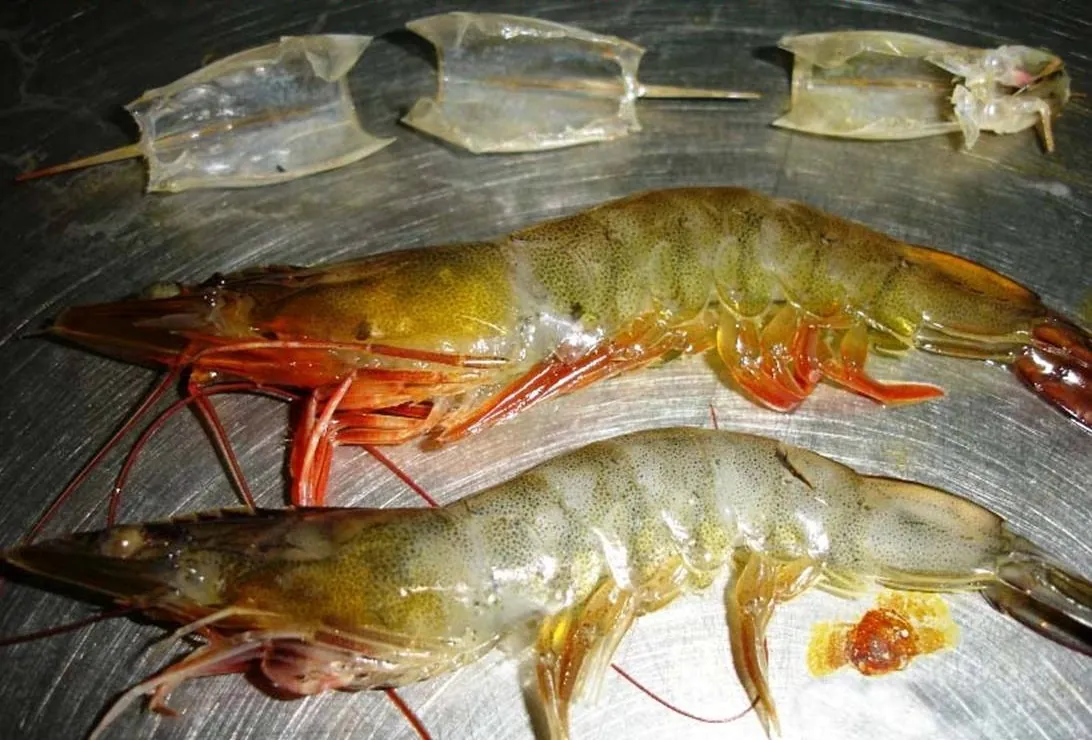
Acute hepatopancreatic necrosis disease (AHPND) — the same disease farmers first called early mortality syndrome (EMS) — is a bacterial disease that kills Penaeus vannamei in the first weeks after stocking. Mortality reaches up to 100% within the first 30–35 days, and it can start as early as day 10. There is no medicine that reverses it once the hepatopancreas is destroyed, so everything comes down to keeping the pathogen out and the pond clean. This is the disease that farmers know simply as “偷死” — the silent die-off, where shrimp sink and die on the bottom before you ever see them sick.
We supply biosecurity and water-treatment equipment to vannamei farms in Ecuador, Indonesia, Vietnam and Thailand — the four markets AHPND has hit hardest. The farms that ride it out are not the ones with the best emergency dosing. They are the ones that screened their post-larvae, treated their intake water, and never let the Vibrio count climb in the first place.
What is AHPND (EMS) in shrimp?
AHPND is a bacterial disease caused by specific virulent strains of Vibrio parahaemolyticus (and a few related vibrios) that carry a ~70-kb plasmid encoding the PirAB toxin — a binary toxin (PirA + PirB) related to the Photorhabdus insect toxins. The bacteria colonise the shrimp’s gut, and the toxin they release destroys the hepatopancreas, the organ that does the shrimp’s digestion and stores its energy reserves. Without a working hepatopancreas the shrimp cannot feed or survive, which is why death comes so fast.
The disease emerged in China around 2009 as “EMS”, spread through Vietnam, Malaysia and Thailand, then jumped to Mexico and Latin America by 2013, the year V. parahaemolyticus was confirmed as the cause. It is a notifiable disease listed by the World Organisation for Animal Health (WOAH). Between 2009 and 2016, AHPND is estimated to have cost the shrimp industry well over USD 10 billion.
How to recognise AHPND: the signs
AHPND shows in the youngest shrimp first, and the signs point straight at the hepatopancreas and the gut:
- Mass deaths on the pond bottom — shrimp sink and die at the bottom rather than swimming sick at the edge. This is the “silent mortality” that gives EMS its name; you often find the loss before you find a sick animal.
- Pale, shrunken hepatopancreas — the single most telling sign. The HP, normally a firm brown-tan organ, becomes atrophied and whitish or pale, sometimes with black spots or streaks (melanised tubules).
- Empty stomach and empty midgut — the digestive tract is empty or has broken, discontinuous content because the shrimp has stopped eating.
- Soft shell and lethargy — loose, soft cuticle, sluggish or spiral swimming, reduced feeding response.
- Onset in the first month — losses concentrate in the first 10–35 days after stocking, which separates AHPND from later-cycle diseases.
The pale hepatopancreas plus early-cycle mass mortality is the field picture. But the gross signs overlap with other vibriosis and with EHP, so confirmation matters.
How AHPND is diagnosed
You cannot confirm AHPND by eye. Two tools settle it:
- Histology of the hepatopancreas shows the textbook lesion — sloughing and marked rounding of the tubule epithelial cells in the early-to-middle stage, before bacteria are even visible, followed by massive secondary bacterial infection.
- PCR targeting the pirA and pirB toxin genes is the fast, definitive test. It confirms not just V. parahaemolyticus but the toxic, AHPND-causing strain specifically — important, because plenty of harmless V. parahaemolyticus lives in any pond. PCR-screening your post-larvae before stocking is the same test that keeps the disease out in the first place.
Can AHPND be treated?
No — there is no cure and no reliable treatment once an AHPND outbreak is underway. Antibiotics are not a control strategy: the toxin does the damage, dosing antibiotics into a pond breeds resistance and leaves residues that wreck export markets, and by the time deaths appear the hepatopancreas is already failing. Anyone selling a “cure for EMS” is selling a residue problem.
Because there is no cure, AHPND is managed exactly like the viral diseases — by prevention and biosecurity, before the pond is ever stocked. The good news is that the levers that work are concrete and equipment-driven.
How to prevent AHPND: biosecurity that works
1. Start with clean seed — SPF, PCR-tested post-larvae
The first lever is the PL. Stock specific-pathogen-free (SPF) post-larvae from a screened hatchery, and PCR-test each batch for the pirA/pirB genes before they go in the pond. AHPND is most often stocked, not caught — a single carrier batch seeds the disease on day one.
2. Disinfect and filter every drop of intake water
Vibrio parahaemolyticus rides in on the water and on carriers. Treat all intake water before it reaches the shrimp:
- Pass it through a UV water sterilizer to knock down free vibrios and the bacteria they travel with.
- Screen out carriers, organic debris and suspended solids with an automatic rotary drum filter backed by a biological filter, so the bacterial load and the food it grows on never enter the pond.
- Where you can, hold and disinfect intake water in a reservoir rather than pumping straight from the sea or estuary.
3. Keep the Vibrio count down and the water stable
AHPND is a dose-and-stress disease: a high Vibrio load plus a stressed shrimp tips a quiet colonisation into a wipe-out. Two things keep the count down — clean water and competition.
- Monitor dissolved oxygen, salinity, pH, temperature and ammonia continuously with a multi-parameter water quality meter. Rising ammonia and a sliding DO are the conditions vibrios thrive in.
- Hold dissolved oxygen above 4–5 mg/L day and night with a paddle wheel aerator for surface mixing and a dissolved oxygen cone where you need high-efficiency oxygen transfer at depth. Low DO at the bottom — exactly where the shrimp and the bacteria live — is what tips the balance.
- Crowd out the pathogen with aquaculture probiotics. Bacillus and similar strains compete with Vibrio for nutrients and space; stocking PL into a mature, microbially-conditioned greenwater rather than sterile new water is one of the best-documented ways to keep AHPND out.
4. Manage the bottom, the density and the early window
The pond bottom is where AHPND-causing vibrios bloom — on accumulated sludge, dead algae and excess feed. Remove sludge between cycles, dry and lime the bottom, and don’t overfeed in the first month. Lower stocking density in AHPND-prone areas: a less crowded, well-oxygenated pond holds a lower bacterial load and a lower-stress shrimp. The first 35 days are the danger window — that is where your biosecurity, water treatment and feeding discipline have to be tightest.
5. Lock down the farm
Disinfect nets, boots, buckets and harvest gear between ponds, never move water or equipment from a problem pond to a clean one, and keep birds and crabs out. Biosecurity is a chain — one contaminated bucket can carry a toxic Vibrio strain into your cleanest pond.
AHPND, EHP and white spot: tell them apart
AHPND is not the only thing that kills shrimp early, and the gross signs overlap. Two diseases sit next to it:
- EHP (Enterocytozoon hepatopenaei) — a microsporidian that also targets the hepatopancreas, but instead of fast mortality it causes slow growth and stunting, and it weakens shrimp so AHPND and white-feces hit harder. See our guide to EHP in shrimp.
- White spot disease (WSSV) — a virus that kills across the whole cycle with white spots on the shell, not the pale-HP early die-off of AHPND. See white spot disease in shrimp.
The shared lesson runs through all three and through the biosecurity mistakes that sink shrimp farms: you don’t treat these diseases, you keep them out — with clean seed, treated water and a stable, low-stress pond.
Frequently asked questions
What is AHPND in shrimp?
AHPND (acute hepatopancreatic necrosis disease), first called early mortality syndrome (EMS), is a bacterial disease caused by toxic strains of Vibrio parahaemolyticus. The bacteria release a PirAB toxin that destroys the shrimp's hepatopancreas, killing up to 100% of a pond within the first 30–35 days after stocking.
What causes early mortality syndrome (EMS)?
Specific virulent strains of Vibrio parahaemolyticus that carry a plasmid encoding the PirAB binary toxin. The bacteria are brought in with infected post-larvae or contaminated water and bloom on a dirty pond bottom; high Vibrio load and stressed shrimp turn a colonisation into mass mortality.
Can AHPND be treated?
No. There is no cure once an outbreak starts, and antibiotics are not a control strategy — they breed resistance and leave residues. AHPND is managed by prevention: SPF PCR-tested post-larvae, disinfected and filtered intake water, probiotics, stable water quality and strict biosecurity.
What does an AHPND hepatopancreas look like?
Pale, whitish and shrunken (atrophied), sometimes with black spots or streaks, instead of the normal firm brown-tan organ. Combined with an empty stomach and gut and early-cycle mass mortality on the pond bottom, it is the classic field picture — confirmed by histology and PCR for the pirA/pirB genes.
How do you prevent AHPND?
Stock SPF, PCR-negative post-larvae; UV-disinfect and filter all intake water; keep the Vibrio count down with probiotics and a clean pond bottom; hold dissolved oxygen above 4–5 mg/L and water quality stable; lower stocking density in prone areas; and disinfect gear between ponds. The first 35 days are the critical window.
Put this into practice on your farm
Tell our engineers your species, target density and site — we will size the system and reply within one business day.
More to explore
- What Is Biofloc Technology and How Does It Work?
- Fish Feed Types: Floating vs Sinking Pellets for Aquaculture
- Trichodina in Tilapia: Symptoms, Diagnosis & Control
- Bacterial & Fungal Diseases in Sturgeon: Symptoms & Control
- Columnaris and Parasitic Diseases in Catfish
- Water Quality & Fish Disease: Why Most Outbreaks Start in the Water
Building a system from what you read here? Ask our engineers for a tailored plan →