
EHP in Shrimp (Enterocytozoon hepatopenaei): The Slow-Growth Disease
EHP (Enterocytozoon hepatopenaei) won't kill shrimp — it stunts them. How this microsporidian spreads, how to test it, and the biosecurity that stops it.
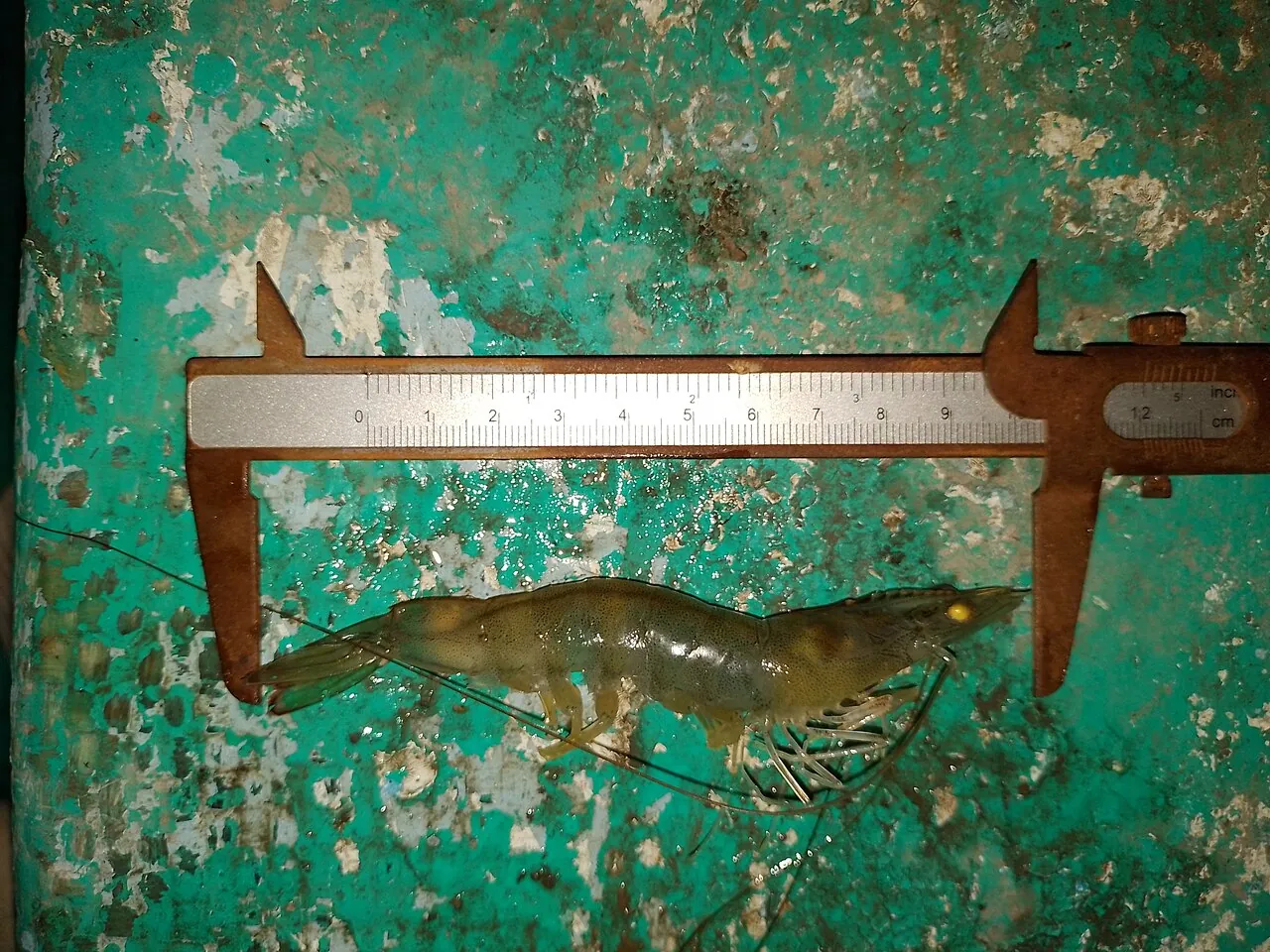
EHP — Enterocytozoon hepatopenaei — is a microsporidian parasite that lives inside the cells of a shrimp’s hepatopancreas and causes hepatopancreatic microsporidiosis (HPM). It rarely kills. That is exactly what makes it so expensive: the pond stays alive, you keep feeding, and at harvest the shrimp are small, uneven and far behind schedule — and only then do most farmers realise what they were paying for.
We supply biosecurity and water-treatment equipment to vannamei farms in Ecuador, Indonesia, Vietnam and Thailand, and EHP is the disease that frustrates them most. There is no dramatic die-off to react to. Feed goes in, the feed conversion ratio climbs, the size spread widens, and the cost only becomes visible on the harvest scale. By then the crop is already lost in margin, if not in biomass.
What is EHP in shrimp?
EHP is a spore-forming microsporidian — a fungus-related obligate intracellular parasite — that infects the hepatopancreas, the organ that does most of a shrimp’s digestion and nutrient absorption. It was first described from black tiger shrimp (Penaeus monodon) in Thailand in 2004 and formally named in 2009. Today it is found across the major shrimp-producing regions of Asia and has spread into Latin America.
The parasite’s tiny oval spores measure roughly 1.1–1.7 × 0.7–1.0 µm. They are tough: they survive in pond sludge, water and organic matter, and they resist many of the disinfectants that work on bacteria and viruses. That durability is the whole reason EHP is so hard to clear from a farm once it arrives.
Crucially, EHP is not the white spot virus and not AHPND. It does not cause mass mortality. It robs growth.
What causes slow growth in shrimp — the EHP signature
The clearest sign of EHP is not a sign at all in the early weeks. Infected post-larvae can look completely normal, and growth retardation is usually not visible until well into the second month of grow-out. By then the pattern is distinctive:
- Stunted growth and a widening size spread. Instead of a tight average daily gain, you get a population that splits — a tail of small shrimp that never catch up. Coefficient of variation in size climbs.
- A climbing feed conversion ratio (FCR). The shrimp eat but do not convert it to weight, because the damaged hepatopancreas cannot absorb nutrients properly. Feed cost per kilo of shrimp rises steadily.
- Soft shells, pale or atrophied hepatopancreas, and lethargy in heavily infected animals.
- White faeces in the trays and on the water surface. EHP very often runs alongside white feces syndrome, and the combination hits growth and survival harder than either alone.
None of these prove EHP on their own — poor feed, low oxygen and other pathogens cause slow growth too. That is why you confirm it in the lab, not by eye.
How to test for EHP in shrimp
EHP is diagnosed by PCR, run on hepatopancreas tissue, faeces or even pond water. Because infection levels are often low early on, a nested PCR (or qPCR) is far more reliable than a single-step PCR for catching light infections — particularly when you are screening post-larvae before stocking. Histology of the hepatopancreas can confirm the spores in the tubule cells, but for a go/no-go decision on a batch of PL, PCR is the practical tool.
The two moments that matter most:
- Screen every batch of post-larvae before you stock. This is the single most valuable test you will run. A PCR-positive batch should not go in the pond.
- Monitor through the cycle if growth starts lagging, so you can confirm EHP rather than chase the wrong cause.
How does EHP spread?
EHP travels two ways, and you have to block both:
- Infected post-larvae (the front door). The most common way a clean farm gets EHP is by stocking it. Carrier broodstock pass it to their PL in the hatchery, and a PCR-positive batch seeds the disease on day one. This is why hatchery-side screening matters so much.
- Horizontally, through water, faeces, cannibalism and pond bottom. EHP transmits directly between shrimp sharing the same water, and the spores accumulate in the sludge. Shrimp eating infected faeces or dead tissue pass it on, and the parasite load builds across the cycle and persists into the next crop if the pond is not properly cleaned. A range of pond carriers — polychaetes, other crustaceans and benthic organisms — have also tested positive and can act as reservoirs.
The pond bottom is the part people underestimate. EHP spores sit in the sediment and re-infect the next crop, which is why a farm can have repeat “slow-growth ponds” season after season in the same spots.
Can you treat EHP in shrimp?
No. There is no cure and no effective drug for EHP. You cannot dose it out of an infected pond, and once shrimp are infected, the hepatopancreas damage is done. Anyone selling an “EHP cure” is selling false hope.
Because there is no treatment, EHP is entirely a prevention and biosecurity problem — clean seed, a clean pond bottom, clean intake water, and low stress. The good news is that those measures are concrete and equipment-driven.
How to prevent and remove EHP: biosecurity that works
1. Start with clean seed — PCR-screen the post-larvae
The first and biggest lever is the PL you stock. Use SPF (specific-pathogen-free) or PCR-negative post-larvae from a screened hatchery, and run a nested PCR on each batch before stocking. Most chronic EHP problems were stocked, not caught.
2. Break the cycle in the pond bottom
Because EHP spores survive in sludge, a contaminated pond will re-infect the next crop unless you reset the bottom. The proven method is liming the dry pond: apply quick lime (CaO) — around 6 tonnes/ha — ploughed into the dry sediment to roughly 10–12 cm, then moisten it to activate the lime so the soil pH rises to 12 or higher for a couple of days. That high-pH burn is what inactivates the spores in the sediment. Remove sludge between crops, dry the bottom hard, and do not shortcut the fallow.
3. Disinfect and filter intake water
EHP spores ride in on the water, so treat all intake water before it reaches the shrimp:
- Pass it through a UV water sterilizer to knock down free spores and the bacteria that travel with them.
- Screen out carriers and organic debris with an automatic rotary drum filter followed by a biological filter, so polychaetes, other crustaceans and infected tissue never enter the pond.
- Hold and disinfect water in a reservoir before use where you can, rather than pumping straight from a shared canal.
4. Keep water quality steady and stress low
A stressed, poorly-fed shrimp is more vulnerable to EHP’s drag on growth, and unstable water makes the white-feces co-infection worse. Monitor dissolved oxygen, salinity, pH and temperature continuously with a multi-parameter water quality meter, and hold dissolved oxygen above 4–5 mg/L day and night using a paddle wheel aerator for surface mixing and a dissolved oxygen cone where you need high-efficiency oxygen transfer at depth. Stable water will not cure EHP, but it limits the secondary damage.
5. Manage the gut and pond microbiome
You cannot vaccinate shrimp, but you can keep the gut and pond environment competitive against opportunists that pile on after EHP. Aquaculture probiotics — Bacillus and similar strains — help suppress the Vibrio that drives the white-feces co-infection and keep the bottom from turning anaerobic. Probiotics are not an EHP treatment, but they reduce the secondary load on an already-stressed hepatopancreas.
6. Lower density and lock down the farm
High stocking density spreads EHP faster — more shrimp, more shared water, more cannibalism, more spore build-up. Where EHP is a known problem, stocking lighter and harvesting cleaner pays back. Disinfect nets, boots and harvest gear between ponds, fence and net against carriers, and never move water or equipment from an infected pond to a clean one.
EHP sits in the same family of failures as AHPND/EMS and the broader set of shrimp farming mistakes and biosecurity gaps: almost every chronic case traces back to the seed or the pond bottom, not to something you could have dosed in mid-cycle.
Is EHP harmful to humans?
No. EHP infects only shrimp and other crustaceans and poses no risk to human health. Shrimp from an EHP pond are safe to eat — they are simply smaller and less profitable. The damage is purely economic, but a stunted, high-FCR crop can quietly erase a season’s margin.
Frequently asked questions
What is EHP in shrimp?
EHP (Enterocytozoon hepatopenaei) is a microsporidian parasite that infects the hepatopancreas of shrimp, causing hepatopancreatic microsporidiosis. It rarely kills but stunts growth, widens size variation and pushes up the feed conversion ratio.
What causes slow, uneven growth in shrimp?
EHP is a leading cause. By damaging the hepatopancreas it stops shrimp absorbing nutrients, so they eat without gaining weight. Growth retardation usually shows from the second month of culture, often alongside white feces.
How do you test for EHP?
By PCR on hepatopancreas tissue, faeces or pond water. Nested PCR (or qPCR) is more sensitive than single-step PCR for light infections, which makes it the right tool for screening post-larvae before stocking.
Can you treat EHP in shrimp?
No. There is no cure or effective drug. Control depends entirely on prevention: PCR-screened SPF post-larvae, liming the pond bottom, disinfected and filtered intake water, stable water quality and strict biosecurity.
How do you remove EHP from a pond?
Reset the pond bottom between crops: remove sludge, dry it hard, and apply quick lime (CaO, around 6 t/ha) ploughed into the sediment so the soil pH rises to 12 or more for a couple of days. EHP spores resist ordinary disinfectants but are inactivated by that high-pH lime burn.
Is EHP dangerous to humans?
No. EHP infects only crustaceans and is harmless to people. Shrimp from an affected pond are safe to eat; the loss is purely economic.
Put this into practice on your farm
Tell our engineers your species, target density and site — we will size the system and reply within one business day.
More to explore
- What Is Biofloc Technology and How Does It Work?
- Fish Feed Types: Floating vs Sinking Pellets for Aquaculture
- Trichodina in Tilapia: Symptoms, Diagnosis & Control
- Bacterial & Fungal Diseases in Sturgeon: Symptoms & Control
- Columnaris and Parasitic Diseases in Catfish
- Water Quality & Fish Disease: Why Most Outbreaks Start in the Water
Building a system from what you read here? Ask our engineers for a tailored plan →