Vibriosis in Shrimp: Red Body, Luminous Disease & How to Control It
Vibrio bacteria cause red body, red leg and luminous disease in shrimp. The signs, the TCBS test, and the water and biosecurity control that prevent it.
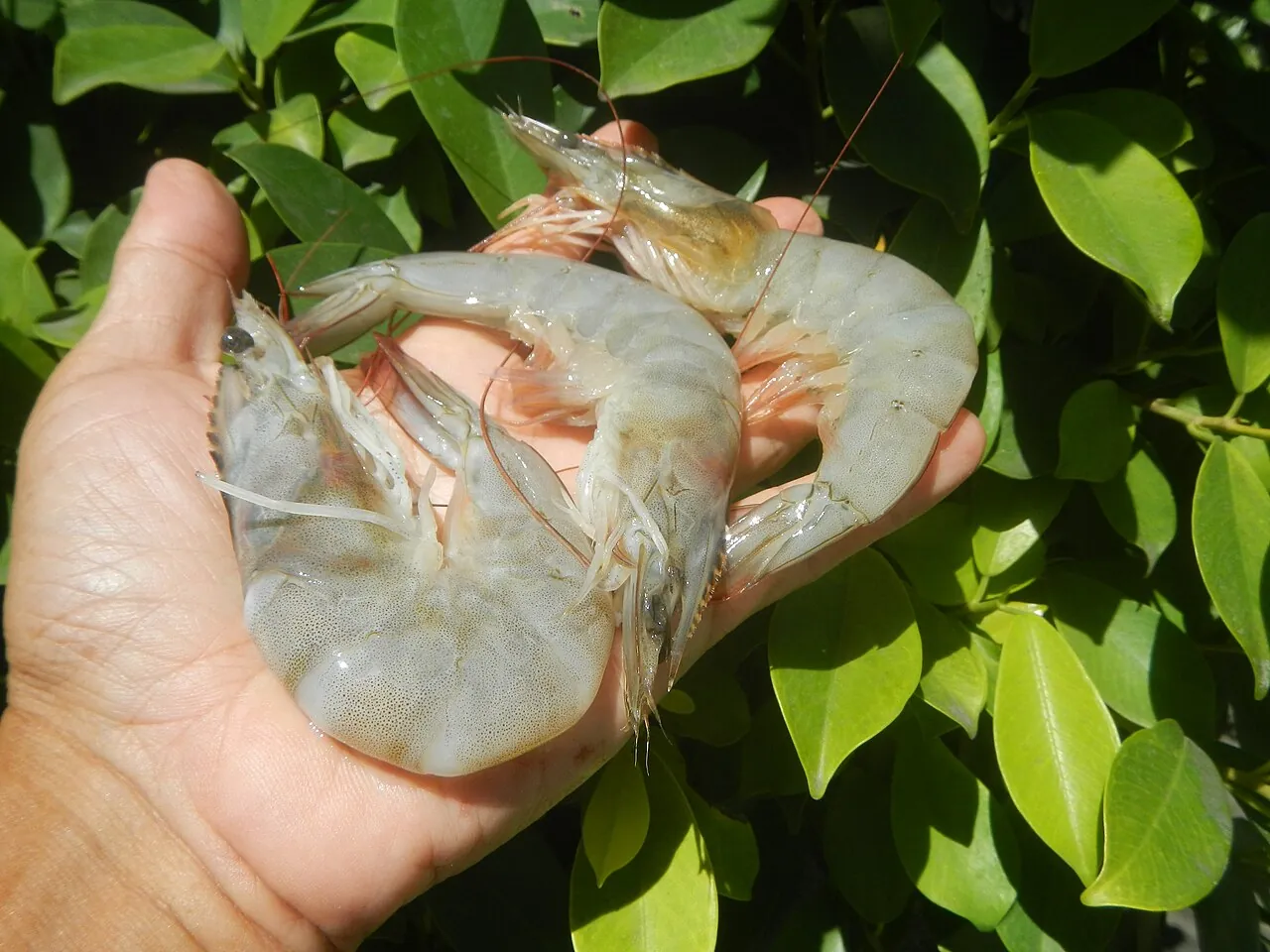
Vibriosis is the catch-all name for the bacterial diseases caused by Vibrio — the most common day-to-day killer in a shrimp farm. Unlike white spot or AHPND, vibriosis is rarely a single dramatic crash. It is the opportunist that sits in every pond, harmless at low numbers, and turns deadly the moment the water goes off, the bottom fouls, or the shrimp are already weakened by another disease. That is the key to understanding it: vibriosis is less an invader you keep out than a population you keep down.
We supply water-treatment and biosecurity equipment to vannamei farms in Ecuador, Indonesia, Vietnam and Thailand, and Vibrio is the problem we get asked about most — because it shows up under so many names. Red body, red leg, loose-shell, bolitas, luminous larvae glowing in the night tanks: all of them are vibriosis wearing a different face.
What is vibriosis in shrimp?
Vibriosis is a bacterial disease of shrimp caused by Vibrio species — chiefly Vibrio harveyi, V. parahaemolyticus, V. alginolyticus and V. campbellii. These are gram-negative bacteria that live naturally in seawater and brackish water and in the gut and shell of every healthy shrimp. They are opportunistic pathogens: they only cause disease when their numbers climb high enough or the shrimp’s defences drop low enough. That distinction matters, because it means vibriosis is driven by the conditions in your pond, not just by the presence of the bacteria.
Because so many Vibrio species and tissues are involved, vibriosis appears in several clinical forms — septic hepatopancreatic necrosis (“red disease”), luminous vibriosis in hatcheries, shell disease, and the systemic infections behind red body and red leg. They share a cause and, importantly, they share a control strategy.
How to recognise vibriosis: the signs
The signs depend on which Vibrio and which life stage, but the field picture is consistent:
- Red body and red leg — a diffuse reddish or pink discolouration of the body, and red, expanded chromatophores on the swimming legs (pleopods), tail fan and antennae. This is the classic “red disease” of grow-out ponds.
- Pale, watery hepatopancreas — the HP loses its firm brown colour and becomes pale and aqueous, much like the early AHPND picture (which is itself a vibriosis).
- Luminescence — shrimp and the water glow blue-green in the dark. This is the hallmark of V. harveyi luminous vibriosis, most devastating in hatchery larvae and PL, which die in waves while the tank glows at night.
- Melanised lesions and shell disease — black or brown eroded spots on the shell, eroded or “rotten” eyes and antennae, and necrotic gills.
- Lethargy, empty gut and poor feeding — sluggish or whirling swimming, loss of balance, an empty midgut and feed trays coming up full.
- Bottom mortality — chronic, day-to-day losses on the pond bottom rather than a single mass die-off, often climbing slowly as water quality slides.
Vibriosis frequently rides on the back of another disease. Shrimp weakened by EHP, white feces, white spot or a moult are far more likely to develop a Vibrio infection — which is why a “vibriosis outbreak” is so often the visible end of a chain that started elsewhere.
How vibriosis is diagnosed: the TCBS test
You cannot diagnose vibriosis on colour alone — red body has other causes, and the gross signs overlap AHPND. The practical farm tool is TCBS agar (thiosulfate-citrate-bile salts-sucrose), a selective culture plate cheap and simple enough to run in a farm lab:
- A sample of hemolymph, hepatopancreas or pond water is streaked onto TCBS and incubated overnight.
- Vibrio colonies grow and sort by colour: yellow colonies (sucrose-fermenting, e.g. V. harveyi, V. alginolyticus) and green colonies (non-sucrose-fermenting, e.g. V. parahaemolyticus).
- A rising total Vibrio count, and especially a rising green-colony count, is an early warning you can act on before the shrimp turn red.
Where the species or strain matters — to separate harmless Vibrio from the AHPND-causing toxic strain, for example — PCR is the confirmatory test. But for day-to-day management, watching the TCBS count is the single most useful thing a farm can do.
Can you treat vibriosis in shrimp?
There is no quick cure, and antibiotics are not the answer. They might knock the count down for a few days, but Vibrio develops resistance fast, antibiotic residues close export markets, and dosing does nothing about the dirty water and stressed shrimp that let the bacteria bloom in the first place. The outbreak comes straight back, now harder to treat.
Vibriosis is controlled, not cured — by keeping the Vibrio count low and the shrimp strong. Because the bacteria are always present, this is an everyday job, not a one-off treatment, and it is overwhelmingly about water and the pond bottom.
How to control Vibrio: water and biosecurity that work
1. Disinfect and filter the intake water
Every litre of intake water brings in more Vibrio and the organic load they feed on. Treat it before it reaches the shrimp:
- Pass intake water through a UV water sterilizer to knock down free vibrios and the bacteria carried with them.
- Screen out carriers, organic debris and suspended solids with an automatic rotary drum filter backed by a biological filter, so the bacterial load and its food never enter the pond. The biofilter also keeps ammonia down, which matters because rising ammonia is exactly what lets Vibrio take over.
- Hold and disinfect intake water in a reservoir where you can, rather than pumping straight from the sea.
2. Watch the water and hold it stable
A high Vibrio count needs a trigger — and the trigger is almost always falling oxygen, rising ammonia, or a swing in salinity, pH or temperature that stresses the shrimp.
- Monitor dissolved oxygen, ammonia, salinity, pH and temperature continuously with a multi-parameter water quality meter. A Vibrio problem is usually visible as a deteriorating water trend before it is visible on the shrimp.
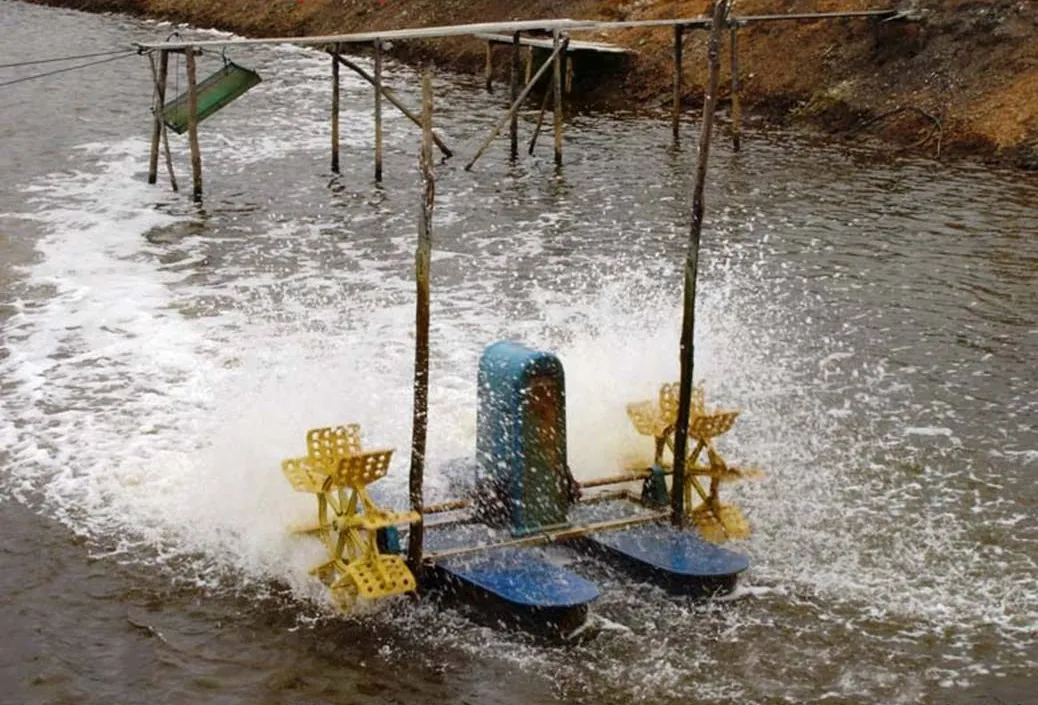
- Hold dissolved oxygen above 4–5 mg/L day and night with a paddle wheel aerator for surface mixing and a dissolved oxygen cone for high-efficiency oxygen transfer at depth. Vibrio thrives where oxygen is lowest — at the bottom, exactly where the shrimp live.
3. Crowd the Vibrio out — probiotics and green water
You will never sterilise a pond, so the smart move is to fill the niche with harmless microbes before Vibrio can.
- Dose aquaculture probiotics — Bacillus and similar strains — to compete with Vibrio for nutrients and space and to break down the sludge it feeds on. This is the single most effective routine control for vibriosis.
- Run a green-water or biofloc system where you can. A dense community of beneficial microalgae (chlorella) and bacteria suppresses Vibrio harveyi directly and stabilises the water; greenwater is a long-proven defence against luminous vibriosis in hatcheries. Floc-based grow-out, like the systems we fit on the most resilient farms, works on the same principle.
4. Manage the bottom and the stocking density
The pond bottom — accumulated sludge, dead algae and uneaten feed — is the Vibrio factory. Remove sludge between cycles, dry and lime the bottom, and don’t overfeed. Lower stocking density in Vibrio-prone conditions: a less crowded, well-oxygenated pond holds a lower bacterial load and a lower-stress shrimp.
5. Start clean and stay clean
Stock SPF, screened post-larvae — luminous vibriosis is often carried in from the hatchery, and an infected batch seeds the problem on day one. Disinfect nets, boots and gear between ponds, and treat your hatchery water hardest of all: larvae have the least defence, and luminous vibriosis can wipe a tank overnight.
Vibriosis, AHPND and the rest: how they connect
Vibriosis is the thread running through several shrimp diseases, which is why telling them apart matters:
- AHPND / EMS is itself a vibriosis — caused by a toxic strain of V. parahaemolyticus — but a specific, fast, early-cycle killer with a pale shrunken hepatopancreas. See our guide to AHPND / EMS in shrimp.
- White feces syndrome often travels with a high Vibrio load and EHP, weakening the gut. See white feces syndrome in shrimp.
- General Vibrio control is the heart of the biosecurity mistakes that sink shrimp farms.
The shared lesson: you don’t dose your way out of vibriosis, you manage your way out — with clean treated water, a clean bottom, probiotic competition and a stable, low-stress pond.
Frequently asked questions
What is vibriosis in shrimp?
Vibriosis is a bacterial disease caused by Vibrio species — mainly Vibrio harveyi, V. parahaemolyticus and V. alginolyticus. These bacteria live naturally in every pond and only cause disease when their numbers climb or the shrimp are stressed, producing red body, red leg, luminous disease and shell disease.
What causes red body disease in shrimp?
Systemic Vibrio infection, usually triggered by poor water quality, low oxygen, a dirty pond bottom, high density or stress from another disease. The reddish body and red, expanded chromatophores on the legs and tail are the bacteria's effect, not a separate pathogen — it is a clinical form of vibriosis.
What is luminous vibriosis?
A form of vibriosis caused by Vibrio harveyi, in which infected shrimp and the water glow blue-green in the dark. It is most destructive in hatchery larvae and post-larvae, where it can cause mass mortality overnight, and is controlled with SPF stock, disinfected water, probiotics and green-water culture.
Can you treat vibriosis in shrimp?
There is no quick cure and antibiotics are not a control strategy — Vibrio develops resistance fast and residues close export markets. Vibriosis is managed by keeping the Vibrio count low: disinfected and filtered intake water, stable water quality, probiotics and green water, a clean pond bottom and lower stocking density.
How do you test for Vibrio in a shrimp pond?
Streak hemolymph, hepatopancreas or pond water onto TCBS agar and incubate overnight. Vibrio grows as yellow or green colonies; a rising total count — especially green colonies — is an early warning to act on before the shrimp show signs. PCR confirms specific strains such as the AHPND-causing V. parahaemolyticus.
Put this into practice on your farm
Tell our engineers your species, target density and site — we will size the system and reply within one business day.
More to explore
- What Is Biofloc Technology and How Does It Work?
- Fish Feed Types: Floating vs Sinking Pellets for Aquaculture
- Trichodina in Tilapia: Symptoms, Diagnosis & Control
- Bacterial & Fungal Diseases in Sturgeon: Symptoms & Control
- Columnaris and Parasitic Diseases in Catfish
- Water Quality & Fish Disease: Why Most Outbreaks Start in the Water
Building a system from what you read here? Ask our engineers for a tailored plan →